
Auto Component & Maruti Vendor Opportunities Near IMT Kharkhoda
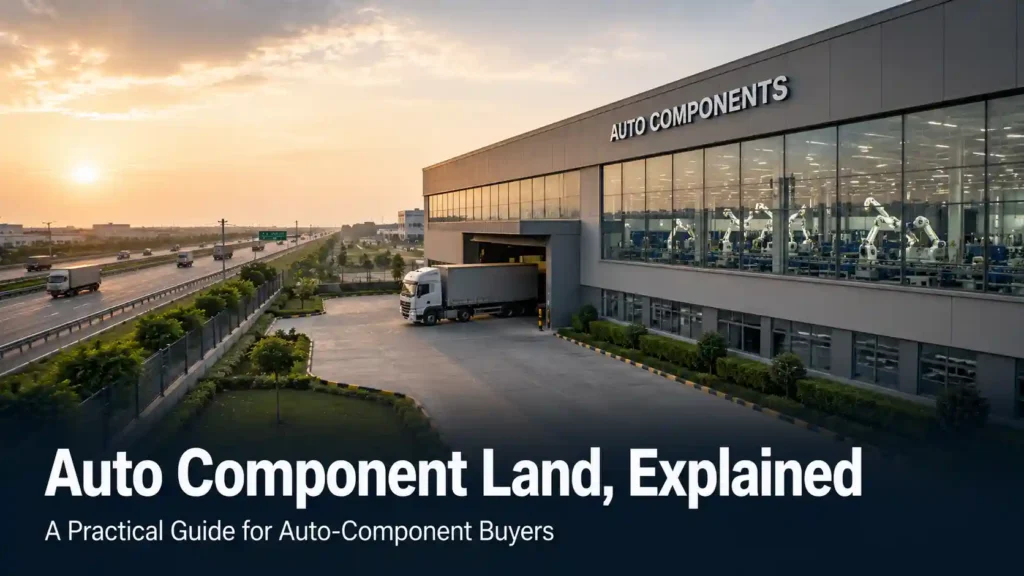
Maruti Suzuki’s Kharkhoda plant now builds 5 lakh vehicles a year and is scaling toward 10 lakh. A plant at that scale cannot run alone — it needs a deep, nearby base of component makers, packaging units, and logistics partners. That need is exactly what’s creating land demand around IMT Kharkhoda right now.
This guide is written for auto-component manufacturers and supplier businesses evaluating this corridor. It covers what actually drives location decisions here — land requirements, logistics access, proximity logic, and the questions worth asking before you commit to a plot. It does not claim that any land purchase grants vendor status with Maruti Suzuki; that approval runs through a separate process, explained below.
Quick Answer: Auto-Component Opportunities Near IMT Kharkhoda
- Maruti Suzuki’s Kharkhoda plant (5 lakh vehicles/year, scaling to 10 lakh) has already pulled in confirmed suppliers like UNO Minda and Jay Bharat Maruti Limited.
- Some suppliers operate inside the plant’s own MSIL Supplier’s Park; most auto-component businesses instead set up on independent industrial land nearby, such as Sisana, about 15 minutes from the plant.
- Land requirements vary by component type, but power load, pollution-category fit, and road access for raw-material and outbound delivery matter more than raw plot size for most auto-ancillary units.
- Becoming an approved Maruti Suzuki vendor is a separate qualification process handled directly by Maruti Suzuki or its Tier-1 partners — owning land near the plant does not, by itself, grant vendor status.
- Fresh private plots in the Kharkhoda belt currently start around ₹14,000 per square yard, well below established hubs like IMT Manesar.
Why Is IMT Kharkhoda Attracting Auto-Component Companies Right Now?
IMT Kharkhoda is attracting auto-component companies because its anchor plant has moved from construction to full operation. The Maruti Suzuki Kharkhoda plant currently produces 5 lakh vehicles a year across two lines, building the Brezza and Victoris, with confirmed plans to double output to 10 lakh.
That kind of scale creates real, ongoing demand for parts, packaging, and logistics support, not a future promise. This pull is already visible in the companies confirmed inside IMT Kharkhoda so far. UNO Minda operates an alloy-wheel plant on roughly 94 acres near the main site, and Jay Bharat Maruti Limited, a long-time Tier-1 partner to Maruti Suzuki, is building a body-and-chassis-parts unit inside the plant’s own MSIL Supplier’s Park.
Beyond these two, HSIIDC has allotted close to 1,000 smaller plots to MSME-scale manufacturers feeding this same supply chain. So, the ecosystem is not hypothetical. It is already forming, plot by plot, around a plant that is currently running, not merely announced.
How Does Auto-Component Supply Chain Structure Affect Where You Should Locate?
Your position in the supply chain — Tier 1, Tier 2, or Tier 3 — directly affects how close you need to be to the plant. Tier 1 suppliers design and manufacture complete systems or modules, like braking components or wiring harnesses, and deliver them almost directly to the OEM’s assembly line.
Because Tier 1 components are often large, complex, or timed to just-in-sequence delivery schedules, these suppliers usually site their factories close to the assembly plant itself. Tier 2 suppliers, by contrast, provide raw materials, smaller parts, or sub-assemblies to Tier 1 companies rather than to the OEM directly, so their proximity requirements are typically more flexible.
Tier 3 suppliers sit a step further back again, usually supplying materials or components to Tier 2 businesses. As a result, a Tier 3 packaging or fastener business generally has far more location flexibility than a Tier 1 supplier delivering finished modules on a strict delivery window.
Strategic Location of Auto-Component Plots Near Maruti Suzuki Kharkhoda Plant
The map below shows how Sisana’s industrial plots connect with the Maruti Suzuki Kharkhoda plant, IMT Kharkhoda, KMP Expressway, NH-44, and other key freight corridors. For auto-component manufacturers, this proximity can significantly reduce transportation time while improving supply-chain efficiency.
Land and Infrastructure Requirements for Auto-Component Units
Auto-component units need land that matches their specific process, not just land that’s close to the plant. Power load, pollution-category fit, and access road width typically matter more than raw plot size for most component makers.
| Requirement | Why It Matters for Auto-Component Units |
| Three-phase power connection | Machining, welding, and moulding equipment usually need reliable three-phase supply, not single-phase |
| Pollution-category / CLU fit | Processes like plating, painting, or forging fall under stricter environmental categories than assembly or packaging |
| Effluent/setback space | Units with wet processes such as washing or coating may need dedicated effluent-handling space |
| Access road width | Raw-material inbound and finished-parts outbound trucks need road width that supports regular truck movement |
| Plot size flexibility | Tier 1 module makers often need larger footprints; Tier 2/3 units frequently do well on smaller, more affordable plots |
| Power backup / uptime | Any process feeding a JIT delivery schedule cannot tolerate frequent outages |
Every one of these factors depends on your specific product and process. Therefore, the right move before buying any plot is matching its permitted category and infrastructure to your actual manufacturing activity, not assuming location alone makes a plot suitable.
📖 Read This Also: Best Industrial Plots in Kharkhoda for Manufacturers, Warehouses & Logistics Businesses The requirements above apply specifically to auto-component units — this guide breaks down how they compare with what warehouse and logistics buyers need from a plot in the same belt.
Looking for an industrial plot that matches your manufacturing process, power requirements, and truck access? Get a location recommendation based on your business needs.
In-Plant Supplier Park vs. Independent Industrial Land: What’s the Difference?
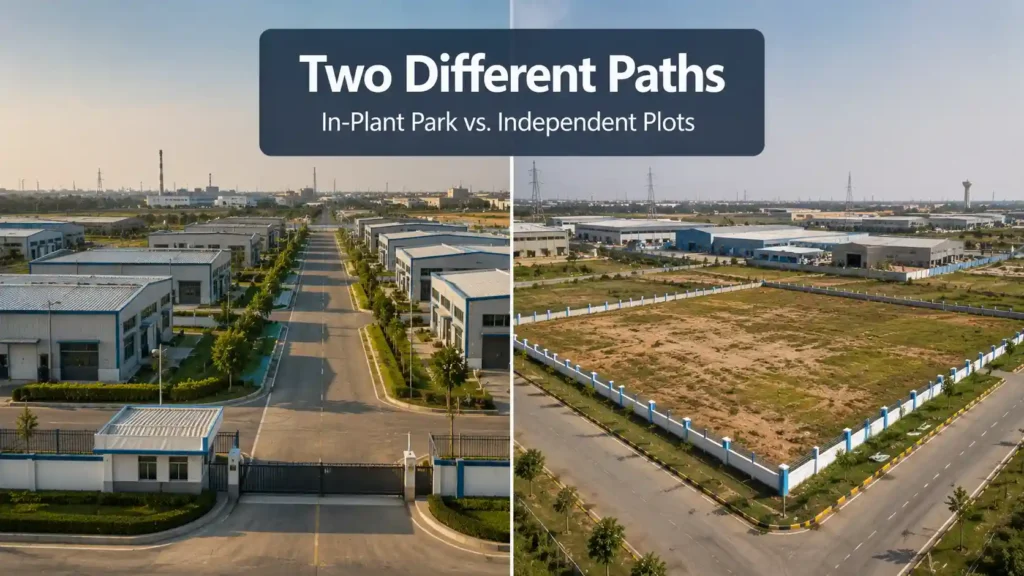
Auto-component businesses near Kharkhoda generally choose between two distinct paths, and confusing them leads to real mistakes. The first is space inside Maruti Suzuki’s own MSIL Supplier’s Park, allocated directly by Maruti Suzuki to select partners it has already qualified.
Jay Bharat Maruti Limited’s unit, for example, sits inside this dedicated park, on just over 6.7 acres. This kind of space is limited, allocated directly by the OEM, and generally reserved for suppliers Maruti Suzuki has already brought into its own vendor programme.
The second path is independent industrial land in the surrounding belt — inside IMT Kharkhoda’s own HSIIDC-allotted plots, or in nearby private freehold zones like Sisana. This land is open to any qualifying industrial buyer, auto-component or otherwise, and does not depend on any existing relationship with Maruti Suzuki.
How Do Companies Actually Become Maruti Suzuki Vendors?
Becoming a Maruti Suzuki vendor is a separate qualification process, handled directly by Maruti Suzuki or through its existing Tier-1 partners, not something a land purchase creates. Vendor approval typically involves technical audits, quality certification checks, and a formal onboarding process managed by the OEM’s own procurement team.
Owning or leasing land near the plant does not, by itself, grant supplier or vendor status. What proximity does offer is a practical advantage once a company either already supplies an OEM elsewhere and wants to shorten its delivery distance, or is actively pursuing vendor qualification and wants a credible, nearby base while that process plays out.
What Should You Evaluate Before Buying Industrial Land Near the Plant?
Before buying, evaluate whether the plot’s category, power, and access genuinely match your process, not just its distance from the plant. A plot that looks well located on a map can still be the wrong choice operationally.
Start with the permitted use category. Confirm the plot allows your specific manufacturing activity, since a mismatch can block environmental clearance later, after you’ve already committed capital. Next, verify actual available power load against your equipment’s real draw, not an advertised general figure.
Also confirm the realistic possession timeline against your own production launch goals, since a delayed handover directly delays revenue. Finally, walk the access road yourself. A road that looks adequate in a brochure may not support the truck turning radius your daily operations actually need.
Logistics and Connectivity Checklist
- Is the plot within a realistic, repeatable delivery window of the Maruti Suzuki plant for your component type?
- Does the access road support container-truck and trailer movement, not just car traffic?
- How far is the nearest expressway entry point, in real driving time, not straight-line distance?
- Is the plot inside an already-developed pocket with working power and roads, or one still waiting on basic infrastructure?
- Does the surrounding belt already host other auto-component or ancillary units, signalling a forming ecosystem?
Want a shortlist of available industrial plots near Maruti Suzuki Kharkhoda that fit your factory size and budget? Speak with our industrial property experts.
Where Do Auto-Component Plots Fit in IMT Kharkhoda’s Broader Ecosystem?
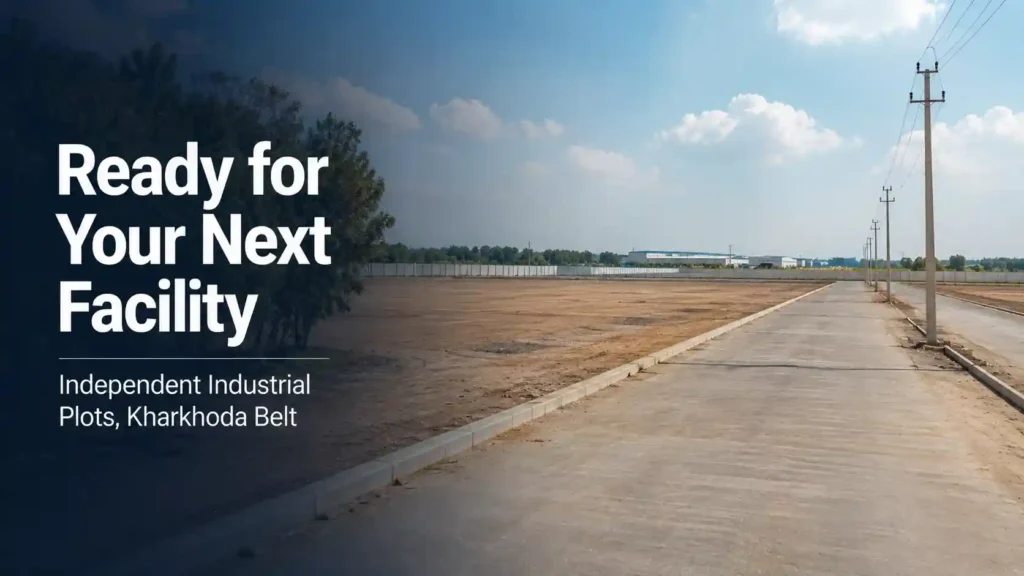
Most independent auto-component land sits in Sisana’s industrial plots, roughly 15 minutes from the Maruti Suzuki plant, rather than inside HSIIDC’s own government-allotted boundary. This is one of the established micro-locations serving this exact buyer profile.
Plots in this belt start from 1,452 square yards at around ₹14,000 per square yard, with internal roads running 44 feet wide and 24-hour power already in place. The state highway serving the corridor is also being widened, from 66 feet to 200 feet, which will further improve access once complete.
RS Group Realty’s Role for Auto-Component Buyers
RS Group Realty is an industrial land development and real estate consultancy working within the Kharkhoda-Sisana corridor, supporting manufacturers and auto-ancillary businesses evaluating land near Maruti Suzuki’s plant. The company does not represent Maruti Suzuki and does not grant or influence vendor status.
What RS Group Realty does provide is ground-level knowledge of this specific belt — plot availability, title verification, and infrastructure status — so an auto-component business can make an informed location decision, including how plot economics compare against the belt’s broader investment case. For companies already pursuing or holding OEM vendor relationships, that local expertise shortens the distance between a decision and an operational site.
Auto-component opportunities near IMT Kharkhoda will keep evolving alongside the plant itself. For a business evaluating this corridor today, the clearest path forward is matching land requirements to your actual process, understanding exactly what proximity does and doesn’t guarantee, and choosing a plot with that distinction in mind.
Frequently Asked Questions About Auto-Component Opportunities Near IMT Kharkhoda
Q1. Does buying land near IMT Kharkhoda make me a Maruti Suzuki vendor? No. Vendor status is a separate qualification process handled directly by Maruti Suzuki or its Tier-1 partners. Land ownership near the plant does not grant or guarantee vendor or supplier status.
Q2. What auto-component companies already operate near the Maruti Suzuki Kharkhoda plant? UNO Minda operates a confirmed alloy-wheel plant on roughly 94 acres, and Jay Bharat Maruti Limited is building a body-and-chassis-parts unit inside the plant’s own MSIL Supplier’s Park.
Q3. What is the difference between the MSIL Supplier’s Park and independent industrial land nearby? The MSIL Supplier’s Park is space allocated directly by Maruti Suzuki to already-qualified partners, while independent land in areas like Sisana is open to any qualifying industrial buyer, regardless of existing OEM relationships.
Q4. What land requirements matter most for auto-component units? Three-phase power capacity, pollution-category fit for your specific process, and access road width for raw-material and outbound delivery typically matter more than raw plot size.
Q5. How close does an auto-component plot need to be to the Maruti Suzuki plant? It depends on your tier and component type. Tier 1 suppliers delivering large or time-critical modules generally need closer proximity, while Tier 2 and Tier 3 businesses typically have more location flexibility.
Site Selection — What Buyers Ask Before Committing
Q6. What plot size is typical for an auto-component unit near IMT Kharkhoda? This varies by supply-chain tier. Tier 1 module makers often need larger footprints, while Tier 2 and Tier 3 component and packaging units frequently operate well on smaller, more affordable plots.
Q7. Is independent land near Kharkhoda cheaper than government-allotted IMT plots? Independent freehold land in areas like Sisana starts around ₹14,000 per square yard and typically avoids HSIIDC’s longer allotment and waiting-list process, though each route has different trade-offs worth evaluating.
Q8. What connectivity does an auto-component plot near Kharkhoda need? Reliable access to the KMP Expressway, NH-44, and the Delhi-Amritsar-Katra Expressway, plus internal roads wide enough for container trucks, supports the raw-material and delivery flow most component units require.
Q9. How do I confirm a plot suits my specific manufacturing process before buying? Verify the plot’s permitted use category against your process, confirm actual available power load against your equipment’s draw, and check the realistic possession timeline against your production launch goals.
Q10. Does RS Group Realty offer official Maruti Suzuki vendor placement? No. RS Group Realty provides industrial land and site-selection support in the Kharkhoda-Sisana corridor; it does not represent Maruti Suzuki or influence its vendor qualification process.
