Barhana Guides

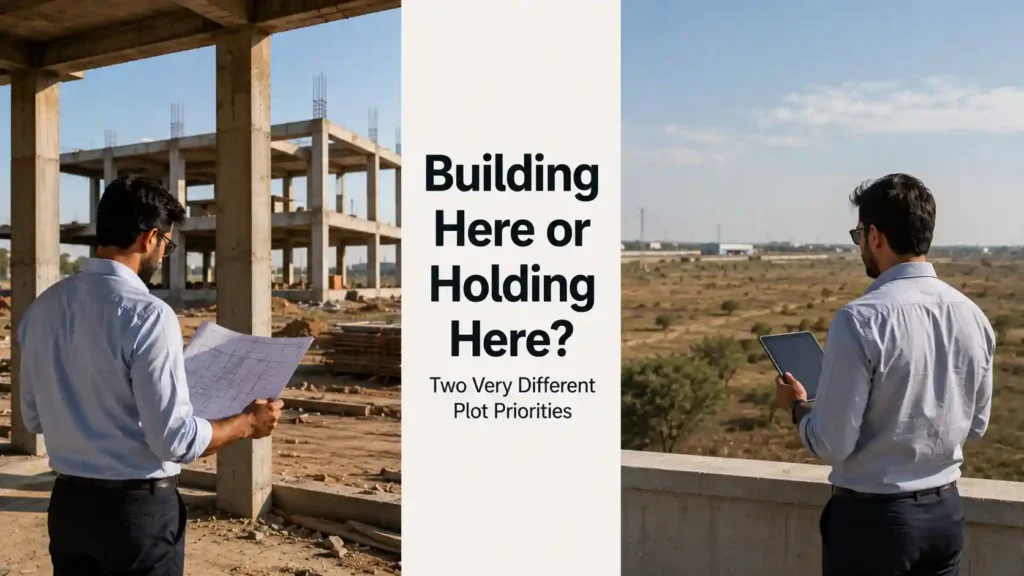
Comparison of an operational buyer at a build site and an investment buyer reviewing land, representing different plot priorities in Barhana
Barhana Guides

Barhana Industrial Park: Good for Manufacturers, Warehouses?

Barhana Industrial Park for Manufacturers & Warehouses: Is It a Good Industrial Location? “Is Barhana Industrial Park a good location?” depends entirely on what you’re building. A factory owner needs something different from a warehouse operator, and both need something different from a pure investor. This guide answers the question properly, by business type. We’ll look at why Barhana works for manufacturers and logistics businesses specifically, what kind of setup actually fits here, and how an investor’s priorities differ from an operator’s. Is Barhana Industrial Park a Good Location? The Short Answer Yes, for the right buyer. Barhana’s NOC-zone status, multi-highway connectivity, and position inside the established Rohtak-Jhajjar industrial belt make it a genuinely functional location, not just a marketing term. However, “good” isn’t universal. A buyer planning a small-to-mid manufacturing unit gets real value here. A buyer hoping for one giant, anchor-scale facility may find the typical plot sizes don’t match that ambition. So, the rest of this guide breaks down exactly who fits where. Why Manufacturers Should Consider Barhana Industrial Park Manufacturers care about specific things: power reliability, regulatory speed, and proximity to workforce and suppliers. Barhana scores reasonably well on all three. Its NOC-zone status generally permits Red, Orange, and Green category industries under India’s standard pollution classification, covering most manufacturing activity. Also, several manufacturers, including established packaging and tape producers, already operate along Sampla-Beri Road, confirming a working industrial base, not an empty field. However, every specific process still needs its own category confirmation before you commit. The NOC-zone advantage speeds up the path, but it doesn’t remove the need to check that your exact activity fits the permitted categories. Why Warehouse and Logistics Businesses Find Barhana Useful Warehouse and logistics operators evaluate land differently than manufacturers. Road access and plot regularity usually matter more than pollution category. Barhana connects within roughly 10 minutes to NH-334B, NH-352, and NH-9, with the Delhi-Katra Expressway about 30 minutes away. That combination lets one facility here realistically serve Rohtak, Jhajjar, Sonipat, and Delhi NCR. Also, plots running up to one acre give warehouse operators enough footprint for a meaningful racking and dock layout. Furthermore, warehousing generally carries a lighter compliance burden than heavy manufacturing, since most storage operations avoid the more intensive pollution-category scrutiny a production unit faces. Barhana Industrial Park Location Map & Highway Connectivity The map below highlights Barhana Industrial Park’s strategic location near Sampla, NH-334B, NH-9, NH-352, and the Delhi-Katra Expressway. It helps manufacturers and warehouse operators understand how the location supports faster transportation, logistics, and industrial operations. What Kind of Industrial Setup Actually Fits Here? A plot’s size and access shape what can realistically be built on it. So, match your setup expectations to Barhana’s actual plot profile. Plots here commonly range from 1,000 square yards to one acre, which suits small-to-mid manufacturers, auto-component suppliers, and warehouse operators well. It’s less suited to a single giant anchor-scale assembly plant, which typically needs far larger contiguous land. Main road frontage from Sampla-Beri Road commonly runs around 71 feet, with internal roads near 44 feet, generally enough for two-way truck movement. However, since Barhana is privately developed rather than a single uniform government estate, always confirm the specific plot’s actual frontage and road condition rather than assuming it matches the belt’s general description. Also, remember that Barhana’s NOC application typically requires a boundary wall and a basic structure first. That means a small upfront construction step before formal approval, worth factoring into your setup timeline and budget. Operational Buyer vs Investment Buyer: A Different Set of Priorities These two buyer types can look at the same plot and want very different things from it. Operational buyers need the permitted category to match their exact activity, since a mismatch can block their NOC application. Also, they need a realistic timeline to complete that initial boundary-wall-and-structure step, since delays there delay everything that follows. Investment buyers, by contrast, care less about immediate build-readiness and more about the broader corridor’s growth trajectory. However, it’s worth knowing that Haryana’s Enterprises and Employment Policy, 2020 incentives, often mentioned alongside Barhana, mainly reward operating, registered enterprises rather than passive landholders. So, a pure investment buyer shouldn’t factor those subsidies heavily into their return expectations. How to Choose the Right Plot for Your Business Type Questions Manufacturers Should Ask Before Buying Does this plot’s permitted category genuinely match my manufacturing process? Is there confirmed power capacity for my equipment? What’s a realistic timeline to complete the boundary wall and structure needed for NOC application? Is the specific plot’s road frontage actually wide enough for my delivery trucks? Questions Warehouse and Logistics Buyers Should Ask Before Buying Is the plot flat and regular enough for an efficient racking and dock layout? Can container trucks genuinely turn and manoeuvre on the access road, not just drive past it? How close is the nearest highway entry point, in real driving terms? Is this specific plot in an already-active part of the belt or a less-developed pocket? How RS Group Realty Helps You Find the Right Fit RS Group Realty treats “Barhana Industrial Park” as several different questions, not one generic pitch. Therefore, before recommending any plot, the team asks what you actually plan to do with it: manufacture, store and distribute, or hold for long-term value. That answer changes which plot size, category fit, and timeline genuinely works for your situation. If you’d like to explore current options matched to your specific business type, our Barhana plots page is the right place to start. Frequently Asked Questions About Barhana Industrial Park Q1. Is Barhana Industrial Park a good location for manufacturers? Yes, particularly for small-to-mid manufacturers across Red, Orange, and Green categories, given the NOC-zone’s faster approval path and an existing industrial base already operating along Sampla-Beri Road. Q2. Is Barhana suitable for warehouse and logistics businesses? Yes. Its position near NH-334B, NH-352, NH-9, and the Delhi-Katra Expressway makes it a practical base for distribution across Rohtak, Jhajjar, Sonipat, and Delhi NCR. Q3. What plot size
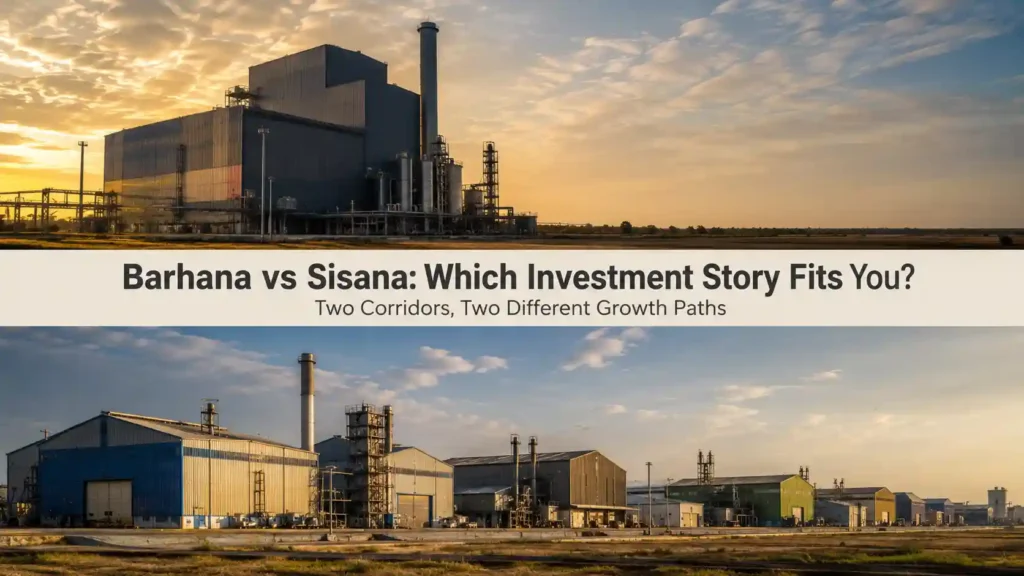
Split view of a single large facility and several smaller factory sheds representing the Barhana vs Sisana comparison
Barhana Guides

Barhana vs Sisana: Which Is Better for Investment?

Barhana vs Sisana: Which Industrial Area Is Better for Investment in Haryana? Barhana and Sisana keep coming up together in searches, and for good reason. Both offer a faster, more accessible entry into industrial land than a typical government estate. But they’re genuinely different opportunities. This guide compares both honestly: where each sits, what’s actually driving demand, how fast you can act, and which buyer profile fits which location. No forced verdict, just a clear framework. Barhana vs Sisana: Two Different Corridors, Two Different Stories Sisana sits inside the Sonipat-Kharkhoda industrial belt, built around one dominant anchor: Maruti Suzuki’s manufacturing plant. Barhana sits in Jhajjar district near Sampla, built around a faster regulatory path and an existing, more varied industrial base across Rohtak and Jhajjar. So, this isn’t a comparison between a strong option and a weak one. It’s a comparison between two different kinds of bets: a concentrated bet on one major anchor, versus a diversified bet on an established, broader industrial belt with a regulatory speed advantage. Location Comparison: Where Each Industrial Area Actually Sits Sisana sits in Kharkhoda tehsil, Sonipat district, roughly 15 minutes from Maruti Suzuki’s plant, connected through the KMP Expressway and the Delhi-Amritsar-Katra Expressway corridor. Barhana sits in Beri tehsil, Jhajjar district, on Sampla-Beri Road, close to the Rohtak district border. It connects within about 10 minutes to NH-334B, NH-352, and NH-9, with the Delhi-Katra Expressway around 30 minutes away. Both benefit from strong highway access. The real difference is which broader corridor each one belongs to: Sisana sits on the Sonipat side of the region, while Barhana sits on the Rohtak-Jhajjar side. Industrial Demand: What’s Actually Driving Growth in Each This is where the two locations diverge most clearly. Sisana’s demand traces back to one dominant source: Maruti Suzuki, whose plant has been in commercial production since February 2025 and is approved for expansion toward 7.5 lakh vehicles a year by 2029. That single anchor pulls in auto-component suppliers and logistics operators directly. Barhana’s demand comes from a broader, more varied base. Rohtak already hosts close to 1,500 industrial units across engineering, servicing, and repair work. Jhajjar runs roughly 1,200 units spanning furniture, rubber, plastics, and chemical processing. No single company drives this demand; the breadth of existing industry does. Therefore, Sisana offers concentrated exposure to one powerful growth story, while Barhana offers diversified exposure to an established, multi-sector base. Entry Route and Approval Speed Compared Both locations offer a faster path than a typical government-allotted estate, but through different mechanisms. Sisana’s advantage is in the purchase route itself: fresh, freehold private plots with a fixed price, skipping the government e-auction or allotment queue used for official IMT Kharkhoda plots. Barhana’s advantage sits in its regulatory status: as an NOC zone, it can typically skip the Change of Land Use certificate required on controlled-area land, shortening the path from purchase to operational approval. So, Sisana saves you time on the buying process itself, while Barhana saves you time on the regulatory process after you’ve bought. Future Potential: Which One Has the Stronger Long-Term Case? Sisana’s future case is tightly linked to a specific, dated catalyst: Maruti’s third-phase expansion through 2029. That’s a real, well-documented growth driver, though it concentrates the thesis around one company’s continued execution. Barhana’s future case is broader and less single-event-driven, tied to continued growth across Rohtak and Jhajjar, plus Haryana’s Enterprises and Employment Policy, 2020, which can support eligible operating enterprises with incentives like stamp duty refunds and employment subsidies. Interestingly, Haryana media reported in late 2025 that HSIIDC’s own reported expansion plan for IMT Kharkhoda includes land in Jhajjar district specifically, though that process remains in early land-valuation stages and is not yet allotment-ready. So, both locations sit inside a genuinely growing region, just anchored to different parts of that growth story. Side-by-Side Comparison Table Factor Sisana (Sonipat side) Barhana (Jhajjar side) District / Tehsil Kharkhoda tehsil, Sonipat district Beri tehsil, Jhajjar district Primary growth driver Maruti Suzuki plant (concentrated anchor) Rohtak-Jhajjar industrial base (diversified) Distance to anchor ~15 minutes to Maruti Suzuki plant Within the Rohtak-Jhajjar belt itself Regulatory advantage Private freehold, skips government allotment queue NOC-zone status, typically skips CLU requirement Key highways KMP Expressway, Delhi-Amritsar-Katra Expressway NH-334B, NH-352, NH-9, Delhi-Katra Expressway Entry price reference ₹14,000 per sq yard, from 1,452 sq yd (RS Group Realty listing) Often referenced near ₹6,500 per sq yard in market listings — confirm current rate directly Best suited for Auto-ancillary suppliers, buyers wanting a single strong anchor story Manufacturers across multiple categories, buyers wanting faster approvals and diversified demand Which Buyer Should Choose Which Location? Neither location is universally better. Each suits a different investment logic. Choose Sisana If… You want direct exposure to the auto-component supply chain building around Maruti Suzuki’s plant. Also, you’re comfortable with a single, strong anchor driving your growth thesis, and you want the speed advantage of a private, fixed-rate purchase over a government allotment queue. Choose Barhana If… You want the fastest possible regulatory path to start operations, regardless of industry category. Also, you’d rather invest in a broader, diversified industrial base than bet on one company’s execution, and you want to explore eligibility for Haryana’s state-level incentive schemes as an operating enterprise. How RS Group Realty Helps You Decide RS Group Realty works across both Sisana and Barhana, not just one. Therefore, the team can walk you through the real trade-offs honestly, based on your specific business type and timeline, rather than steering you toward whichever is easier to sell. If the Maruti-Kharkhoda anchor story fits your goal, our Sisana page covers current options. If NOC-zone speed and the Rohtak-Jhajjar base fit better, our Barhana page is the right next step. Frequently Asked Questions About Barhana vs Sisana Q1. Is Barhana better than Sisana? Neither is universally better. Sisana offers concentrated exposure to the Maruti Suzuki anchor near Kharkhoda, while Barhana offers a faster regulatory path and exposure to the broader, diversified Rohtak-Jhajjar industrial base. Q2. What is the difference between Barhana

Investor overlooking a developing industrial plot representing the Barhana Industrial Area investment opportunity
Barhana Guides

Invest in Barhana Industrial Area: ROI & Growth Guide

Why Invest in Barhana Industrial Area in Haryana? ROI, Connectivity & Future Potential “Should I invest in Barhana?” deserves a real answer, not a brochure line. So, let’s build the actual case, mechanism by mechanism, rather than just asserting it. This guide covers why Barhana draws serious interest, the real logic behind its return potential, which buyer profile fits best, and the risks worth weighing before you commit any capital. Why Barhana Is Drawing Industrial Investment Attention Most industrial pitches lean on a future promise. Barhana’s case rests on something more immediate: a regulatory advantage that’s already real today. Barhana sits in Jhajjar district’s Beri tehsil, on Sampla-Beri Road, inside what the market calls the “Barhana Free Zone.” Several manufacturers already operate here, confirming this is a functioning industrial pocket, not a speculative new listing. Also, its NOC-zone status means businesses can typically start the approval process faster than land inside a controlled area requiring a Change of Land Use certificate first. That regulatory head start is the foundation everything else in this article builds on. The Investment Logic Behind Barhana’s NOC-Zone Status Time has a real cost in industrial real estate, and this is where Barhana’s case gets concrete. Land that requires a CLU certificate before any industrial activity can begin often sits idle for months while approvals work through the system. Barhana’s NOC-zone status, by contrast, typically lets a buyer apply for their No Objection Certificate after building just a boundary wall and a basic structure, shortening that idle period considerably. Therefore, the ROI mechanism here isn’t speculative price appreciation alone. It’s a shorter gap between purchase and productive use, whether that means starting a business sooner or completing a rentable structure faster. For an operational buyer, that time saved translates directly into earlier revenue. Location Advantage: What Actually Drives Value Here Connectivity decides whether a regulatory advantage actually matters in practice. So, here’s what backs Barhana’s location case. Sampla-Beri Road already carries real industrial traffic from existing factories. From there, NH-334B, NH-352, and NH-9 all sit within roughly 10 minutes, linking Barhana to Jhajjar, Rohtak, Sonipat, and Delhi. The Delhi-Katra Expressway adds a further high-speed route about 30 minutes away. This combination matters because connectivity is what turns an affordable entry price into usable, in-demand land. Without it, a low price stays low. With it, a low price becomes an entry point ahead of a re-rating. Which Industrial Buyers Should Look at Barhana? Not every investor extracts the same value here. So, match your goal honestly before committing. Manufacturers in Red, Orange, or Green categories benefit most directly, since the NOC-zone status shortens their path from purchase to operational unit. Warehouse and logistics operators gain from the multi-highway access converging near Sampla, useful for serving Rohtak, Jhajjar, Sonipat, and Delhi NCR from one base. Service-sector businesses also fit, since the Free Zone designation explicitly permits industry, warehousing, and service use on the same plot. Long-term land investors comfortable with a multi-year horizon may find value entering a belt still earlier in its growth curve than more saturated hubs closer to Delhi. Long-Term Growth and Appreciation Potential History offers a useful, though not guaranteed, guide here. Land near anchor industrial activity in belts like Manesar and Bawal appreciated meaningfully once those areas matured, a process that played out over several years, not months. Barhana sits inside a similar setup. Rohtak already hosts close to 1,500 industrial units, and Jhajjar runs roughly 1,200 more, while Kharkhoda’s momentum continues building since Maruti Suzuki’s plant began commercial production there in 2025. As that wider corridor matures, demand for connected, fast-to-develop land like Barhana’s tends to follow. Barhana’s Strategic Location Near IMT Kharkhoda & Maruti Suzuki Plant The map below shows how Barhana is strategically positioned within the wider Rohtak–Jhajjar–Kharkhoda industrial belt. As IMT Kharkhoda continues attracting manufacturing and logistics investments, nearby industrial locations such as Barhana may benefit from increasing industrial activity and connectivity demand. Also, Haryana’s Enterprises and Employment Policy, 2020 adds a second growth lever, though an important one mainly for operating enterprises rather than passive landholders. Stamp duty refunds, interest subsidies, and employment generation support all require an actual running, registered business to claim, which means Barhana’s appreciation thesis works best for buyers planning real operations, not pure land banking. Risks Every Investor Should Weigh Before Committing A fair investment case names its risks. Here are the ones that matter most for Barhana specifically. What Could Slow This Thesis Down Barhana is privately developed rather than a single government-built estate, so plot-by-plot infrastructure quality can vary more than in a uniform government township. Also, industrial land carries real liquidity risk, trading less quickly than residential property, so plan for a genuine multi-year hold. Furthermore, government subsidy eligibility depends on block category and enterprise size, details that can shift and require direct verification rather than assumption. Finally, broader corridor growth, while real, still depends on continued momentum in Kharkhoda, Rohtak, and Jhajjar, none of which is guaranteed to move on a fixed timeline. How to Protect Your Investment Verify title and zoning independently for any specific plot, rather than relying on a general “Free Zone” label. Also, confirm current subsidy eligibility directly with Haryana’s Industries department if incentives factor into your decision, and request real, current site photos or a visit rather than relying on brochure imagery alone. Finally, choose an entry route and plot that actually matches your timeline, whether that’s starting operations soon or holding for multi-year appreciation. Barhana or Sisana? Two Entry Points, One Broader Corridor If you’ve also looked at Sisana, you’re not choosing between rivals. Both sit within the same broader Sonipat-Jhajjar-Rohtak industrial region, just anchored to different parts of it. Sisana sits inside the established belt anchored by Maruti Suzuki’s plant near Kharkhoda, with a fixed, fresh-title entry rate and ready infrastructure. Barhana, meanwhile, offers its NOC-zone speed advantage and sits closer to the Rohtak-Jhajjar industrial base specifically. So, the real question isn’t which one is “better.” It’s which corridor’s anchor demand

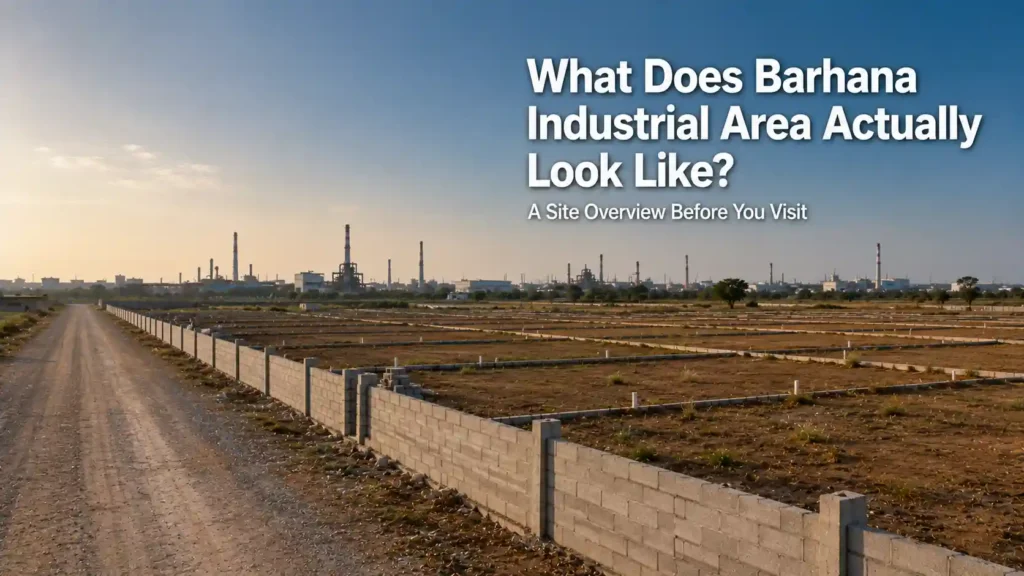
Open plotted industrial land with a boundary wall representing a general site overview of Barhana Industrial Area
Barhana Guides

Barhana Industrial Area Photos, Site Overview & Infra

Barhana Industrial Area Photos, Site Overview & Infrastructure Highlights Searching for “Barhana Industrial Area photos” usually means one thing: you want to see this place before you spend more time researching it. That’s a smart instinct, so let’s give you a genuine overview. This guide walks through what the site, roads, and surrounding setup actually look like, what infrastructure to watch for, and why a real visit still beats any photo, however good. What “Barhana Industrial Area Photos” Searches Are Really Looking For People searching this term aren’t browsing for inspiration. They’re doing due diligence, trying to picture the actual ground before committing more time or money. That’s the right instinct. Therefore, this article focuses less on pretty pictures and more on what you should actually expect to see, hear, and notice when you visit Barhana in person. Site Overview: What to Expect When You See Barhana in Person Barhana sits on Sampla-Beri Road in Jhajjar district’s Beri tehsil, right at the edge of the Rohtak border. The area itself is a mix of already-operating industrial units and open, plotted land still being developed. Several manufacturers, including established packaging and tape producers, already run operations here, so this isn’t an empty field waiting for its first tenant. Meanwhile, newer plots typically show the early signs of an NOC-zone setup: a boundary wall and a small structure, often the minimum needed to begin the approval process. Expect flat, semi-rural land transitioning into industrial use, rather than a fully built-out estate. That’s consistent with a growing belt, not a finished one. Barhana Industrial Area Location Map Before evaluating roads, infrastructure, and site conditions, it helps to understand exactly where Barhana Industrial Area is located in relation to Sampla, Jhajjar, Rohtak, NH-334B, NH-9, and the wider industrial corridor. Roads and Access: The View From the Ground Sampla-Beri Road itself is the area’s main artery, and it already carries real industrial traffic, since multiple factories operate along it today. From there, NH-334B, NH-352, and NH-9 all sit within roughly 10 minutes, connecting Barhana to Jhajjar, Rohtak, Sonipat, and Delhi. On the ground, this means a working arterial road feeding into a wider highway network, not an isolated lane. However, internal roads on individual plots vary depending on how far along that specific plot’s development is, so this is exactly the kind of detail worth confirming during a visit rather than assuming from a brochure map. The Surrounding Environment and Existing Industrial Setup Barhana doesn’t sit in isolation. Rohtak, a short distance away, already hosts close to 1,500 industrial units across engineering, servicing, and repair work. Jhajjar district itself runs roughly 1,200 units spanning furniture, rubber, plastics, and chemical processing. Meanwhile, Kharkhoda, further along the same broader corridor, has drawn real momentum since Maruti Suzuki’s plant began commercial production there in 2025, pulling in auto-component suppliers across the wider belt. So, the environment around Barhana is genuinely industrial, not agricultural land hoping to become industrial someday. Infrastructure Highlights to Look For During a Site Visit A useful site visit checks specific things, not just a general impression. Look for the boundary wall and basic structure typical of NOC-zone plots, since this confirms the standard approval pathway is already underway. Also, check the actual road surface and width feeding the specific plot, not just the main Sampla-Beri Road. Confirm visible power infrastructure nearby, and look at drainage and ground level, since flat, well-drained land matters more for industrial construction than it might for other uses. Why Photos Alone Don’t Tell the Full Story What Stock and Brochure Images Often Miss Most brochures, including the illustrative images in this very article, use general or AI-generated visuals to explain a concept, not literal photographs of one specific plot. A single photo also can’t show scale accurately, can’t capture the season or lighting honestly, and rarely shows what sits directly on the other side of the boundary. How to Get a True Visual Picture Before You Buy Ask directly for recent, dated photos or video of the specific plot you’re considering, not a generic brochure image. Also, cross-check the location independently using satellite map tools, and verify the khasra and murabba revenue numbers match what’s being shown to you. Wherever possible, visit in person or send someone you trust to confirm conditions on the ground. No photo, however detailed, fully replaces that. See Barhana in Person RS Group Realty can arrange a direct site visit or share current, dated photos of specific plots in Barhana, rather than relying on generic brochure visuals. If you’d like to see real conditions before deciding anything, visit our Barhana plots page and request a site visit or current photos directly. Frequently Asked Questions About Barhana Industrial Area Photos Q1. What does Barhana Industrial Area actually look like? Expect a mix of already-operating industrial units and open, plotted land in earlier stages of development, set along Sampla-Beri Road in Jhajjar district, with flat, semi-rural surroundings transitioning into industrial use. Q2. Are there real photos available of Barhana plots? RS Group Realty can provide current, dated photos or arrange a site visit for specific plots on request, rather than relying only on generic brochure or stock imagery. Q3. What do the roads near Barhana Industrial Area look like? Sampla-Beri Road already carries real industrial traffic from existing factories, connecting within about 10 minutes to NH-334B, NH-352, and NH-9, though individual plot access roads vary by development stage. Q4. What industrial setup already exists near Barhana? Established manufacturers already operate along Sampla-Beri Road, while nearby Rohtak and Jhajjar host roughly 1,500 and 1,200 industrial units respectively, confirming a genuinely active surrounding industrial base. Q5. Can I see Barhana Industrial Area before buying? Yes. A direct site visit is the most reliable way to verify conditions, and RS Group Realty can arrange one alongside current photos of specific plots. More FAQs on Barhana Industrial Area Photos Q6. Why do brochure photos sometimes look different from the actual site? Many brochures use general or stock-style images to

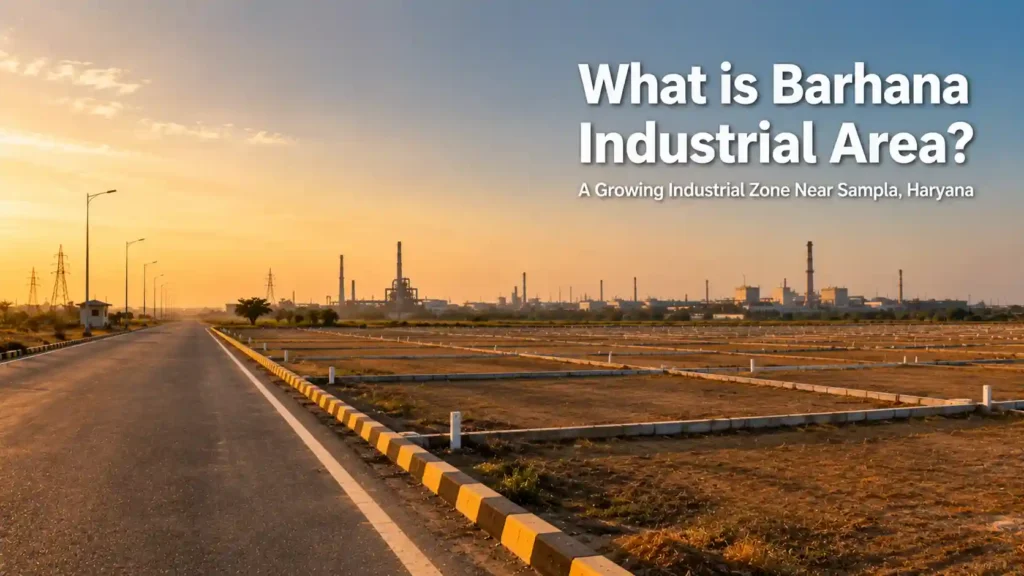
Open plotted industrial land representing Barhana Industrial Area near Sampla, Haryana
Barhana Guides

Barhana Industrial Area: Location, Connectivity & Growth

What is Barhana Industrial Area? Location, Connectivity & Industrial Growth Overview Industrial investors searching near Sampla and Jhajjar keep running into one name: Barhana. So, what is Barhana Industrial Area, and why does it keep coming up? This guide explains what Barhana actually is, where it sits, what its NOC-zone status means in practice, and why its growth outlook matters for investors and business owners evaluating land near Sampla, Haryana. What Is Barhana Industrial Area? A Quick Snapshot Barhana is a village in Jhajjar district’s Beri tehsil, sitting directly on Sampla-Beri Road, right at the edge of the Rohtak district border. Over the past several years, this stretch has developed into a recognised industrial belt, often marketed as the “Barhana Free Zone.” Unlike a single government-built estate, Barhana’s industrial area is a cluster of privately developed plots along an established industrial corridor. Established manufacturers, including packaging and tape producers, already operate here, confirming this isn’t a speculative new listing but a functioning industrial pocket. Most plots in the area are marketed under “Free Zone” or “NOC zone” status, a term that comes up constantly in this belt and deserves its own explanation, which we’ll get to shortly. Location and Connectivity of Barhana Industrial Area Location is the first thing any serious buyer should verify, so here is exactly where Barhana sits and what connects to it. Barhana sits roughly 5 minutes from Sampla-Beri Road itself, the main artery running through this belt. From there, NH-334B, which links Loharu, Rewari, Jhajjar, Kharkhoda, Sonipat, and Baghpat, sits about 10 minutes away. Also, NH-352, connecting Panchgaon, Jhajjar, Rohtak, and Jind, is roughly the same distance. NH-9, the Delhi-Rohtak highway, is also about 10 minutes from Barhana, while the Delhi-Katra Expressway sits around 30 minutes away. Sampla itself, just a few kilometres from Barhana, has its own railway station on the Delhi-Rohtak line, with dozens of trains passing through daily. It’s worth noting that Sampla does not currently have an operating metro station, despite some listings implying otherwise. A metro extension has been discussed in the past but does not exist today, so buyers should rely on the confirmed railway and highway connections instead. Why Barhana Operates as an NOC-Free Zone “NOC zone” is the single most important term to understand about this location, since it directly affects how quickly a business can actually start operating. In Haryana, land inside an official “controlled area” typically requires a Change of Land Use (CLU) certificate before any industrial activity can begin, a process that takes time. Land outside these controlled areas, like much of Barhana, can skip that CLU requirement entirely, since it already permits industrial use under local zoning. As a result, businesses here can apply for their No Objection Certificate (NOC) much faster than in a controlled-area estate, often after building just a boundary wall and a basic structure. Also, this status typically allows Red, Orange, and Green category industries, the standard pollution-based classification used across India, giving most manufacturing and warehousing businesses a viable path to set up here. This isn’t unique marketing language either. Multiple independent listings across the wider Sampla-Jhajjar-Sonipat belt use the same “NOC zone” or “Free Zone” terminology, confirming it reflects a genuine, recognised category of land in this market. Industrial Growth Drivers Around Barhana Barhana doesn’t grow in isolation. It sits inside a wider industrial corridor, and that context explains much of its appeal. Rohtak, a short distance away, already hosts roughly 1,500 industrial units spanning engineering, servicing, and repair work. Jhajjar, the district Barhana belongs to, runs close to 1,200 industrial units across furniture, rubber, plastics, petrochemicals, metal, and chemical processing. Meanwhile, Kharkhoda, further along the same broader corridor, has seen real momentum since Maruti Suzuki’s plant began commercial production there in February 2025, with further expansion approved through 2029. This continues to draw auto-component suppliers and logistics operators toward the wider belt, including locations like Barhana that sit within reasonable reach of that demand. Reliance MET City, a large integrated industrial township also developing nearby, adds further weight to this corridor’s long-term trajectory. Barhana Industrial Area Map: Connectivity with IMT Kharkhoda and Major Highways The growth of IMT Kharkhoda Industrial Area continues to influence industrial demand across the wider corridor. Who Should Consider Barhana Industrial Area? Not every investor needs the same thing from this location. So, here’s how different buyer types typically fit. Manufacturers across Red, Orange, and Green categories benefit directly from the NOC-zone status, since it shortens the path from purchase to operational unit. Warehouse and logistics operators gain from the multiple highway connections converging near Sampla, useful for serving Rohtak, Jhajjar, Sonipat, and Delhi NCR from one base. Service businesses also fit here, since the Free Zone designation explicitly allows industry, warehousing, and service use on the same plot. Long-term land investors may find value in entering a belt that’s still earlier in its growth curve compared to more saturated industrial hubs closer to Delhi. Government Support and Future Growth Outlook Haryana’s Industrial Incentive Policies Haryana’s Enterprises and Employment Policy (HEEP), 2020 offers real, documented incentives for eligible industrial units across the state, including stamp duty refunds, interest subsidies on term loans, electricity duty exemptions, generator-set subsidies, and employment generation support of up to roughly ₹36,000 to ₹48,000 per worker annually for several years. However, the exact percentage and duration of each benefit depends on the specific block category (A, B, C, or D) and the size of the enterprise, which varies by location within Jhajjar district. Therefore, any buyer should confirm current eligibility directly with Haryana’s Industries and Commerce department or a qualified subsidy consultant before factoring a specific number into their investment plan. What This Means for the Years Ahead Industrial belts near an established highway network, with an existing manufacturing base and simplified approvals, tend to attract steady, multi-year interest rather than sudden speculative spikes. Barhana’s position alongside the growing Rohtak-Jhajjar-Kharkhoda corridor, combined with its NOC-zone status, gives it a genuine, if gradual, growth thesis. That said, treat

Scroll to Top