
Why Invest in Barhana Industrial Area in Haryana? ROI, Connectivity & Future Potential
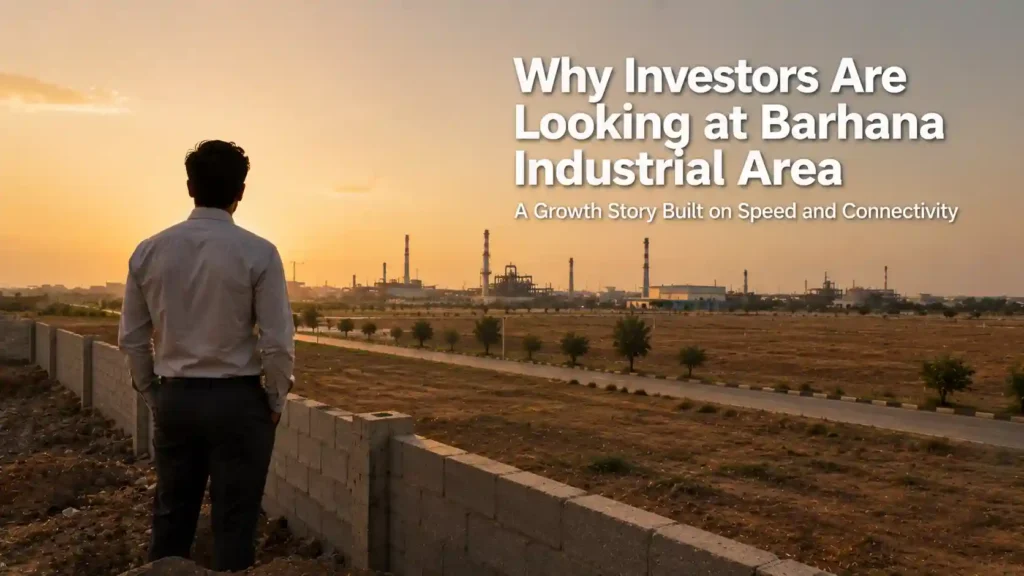
“Should I invest in Barhana?” deserves a real answer, not a brochure line. So, let’s build the actual case, mechanism by mechanism, rather than just asserting it.
This guide covers why Barhana draws serious interest, the real logic behind its return potential, which buyer profile fits best, and the risks worth weighing before you commit any capital.
Why Barhana Is Drawing Industrial Investment Attention
Most industrial pitches lean on a future promise. Barhana’s case rests on something more immediate: a regulatory advantage that’s already real today.
Barhana sits in Jhajjar district’s Beri tehsil, on Sampla-Beri Road, inside what the market calls the “Barhana Free Zone.” Several manufacturers already operate here, confirming this is a functioning industrial pocket, not a speculative new listing. Also, its NOC-zone status means businesses can typically start the approval process faster than land inside a controlled area requiring a Change of Land Use certificate first.
That regulatory head start is the foundation everything else in this article builds on.
The Investment Logic Behind Barhana’s NOC-Zone Status
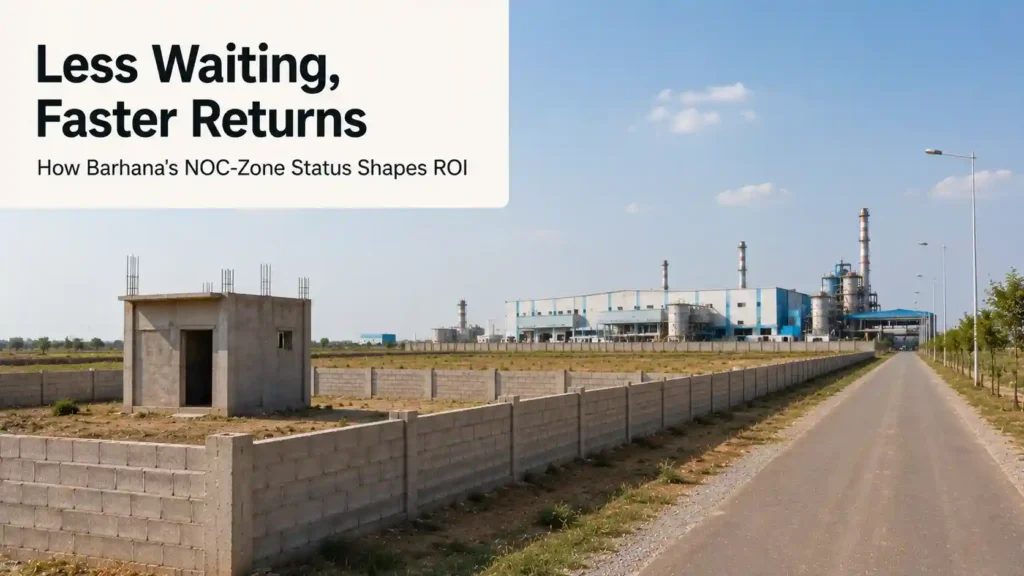
Time has a real cost in industrial real estate, and this is where Barhana’s case gets concrete.
Land that requires a CLU certificate before any industrial activity can begin often sits idle for months while approvals work through the system. Barhana’s NOC-zone status, by contrast, typically lets a buyer apply for their No Objection Certificate after building just a boundary wall and a basic structure, shortening that idle period considerably.
Therefore, the ROI mechanism here isn’t speculative price appreciation alone. It’s a shorter gap between purchase and productive use, whether that means starting a business sooner or completing a rentable structure faster. For an operational buyer, that time saved translates directly into earlier revenue.
Location Advantage: What Actually Drives Value Here
Connectivity decides whether a regulatory advantage actually matters in practice. So, here’s what backs Barhana’s location case.
Sampla-Beri Road already carries real industrial traffic from existing factories. From there, NH-334B, NH-352, and NH-9 all sit within roughly 10 minutes, linking Barhana to Jhajjar, Rohtak, Sonipat, and Delhi. The Delhi-Katra Expressway adds a further high-speed route about 30 minutes away.
This combination matters because connectivity is what turns an affordable entry price into usable, in-demand land. Without it, a low price stays low. With it, a low price becomes an entry point ahead of a re-rating.
Which Industrial Buyers Should Look at Barhana?
Not every investor extracts the same value here. So, match your goal honestly before committing.
Manufacturers in Red, Orange, or Green categories benefit most directly, since the NOC-zone status shortens their path from purchase to operational unit. Warehouse and logistics operators gain from the multi-highway access converging near Sampla, useful for serving Rohtak, Jhajjar, Sonipat, and Delhi NCR from one base.
Service-sector businesses also fit, since the Free Zone designation explicitly permits industry, warehousing, and service use on the same plot. Operational buyers can also skip the build entirely: the Barhana project’s ready-to-move factory sits on a 1,733 sq. yd. industrial plot at ₹15,000 per square yard, with a flexible payment plan. Long-term land investors comfortable with a multi-year horizon may find value entering a belt still earlier in its growth curve than more saturated hubs closer to Delhi.
Long-Term Growth and Appreciation Potential
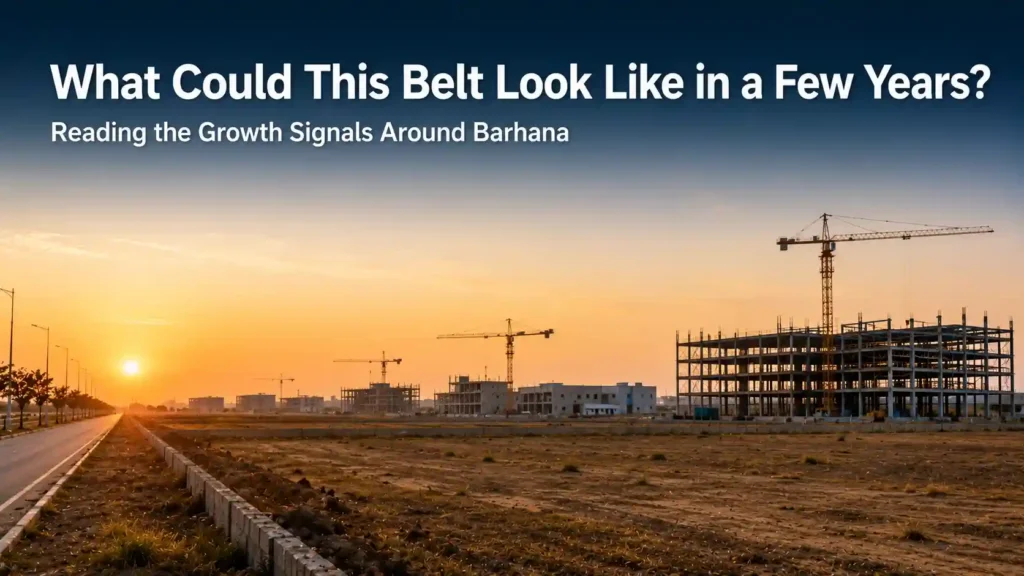
History offers a useful, though not guaranteed, guide here. Land near anchor industrial activity in belts like Manesar and Bawal appreciated meaningfully once those areas matured, a process that played out over several years, not months.
Barhana sits inside a similar setup. Rohtak already hosts close to 1,500 industrial units, and Jhajjar runs roughly 1,200 more, while Kharkhoda’s momentum continues building since Maruti Suzuki’s plant began commercial production there in 2025. As that wider corridor matures, demand for connected, fast-to-develop land like Barhana’s tends to follow.
Barhana’s Strategic Location Near IMT Kharkhoda & Maruti Suzuki Plant
The map below shows how Barhana is strategically positioned within the wider Rohtak–Jhajjar–Kharkhoda industrial belt. As IMT Kharkhoda continues attracting manufacturing and logistics investments, nearby industrial locations such as Barhana may benefit from increasing industrial activity and connectivity demand.
Also, Haryana’s Enterprises and Employment Policy, 2020 adds a second growth lever, though an important one mainly for operating enterprises rather than passive landholders. Stamp duty refunds, interest subsidies, and employment generation support all require an actual running, registered business to claim, which means Barhana’s appreciation thesis works best for buyers planning real operations, not pure land banking.
Risks Every Investor Should Weigh Before Committing
A fair investment case names its risks. Here are the ones that matter most for Barhana specifically.
What Could Slow This Thesis Down
Barhana is privately developed rather than a single government-built estate, so plot-by-plot infrastructure quality can vary more than in a uniform government township. Also, industrial land carries real liquidity risk, trading less quickly than residential property, so plan for a genuine multi-year hold.
Furthermore, government subsidy eligibility depends on block category and enterprise size, details that can shift and require direct verification rather than assumption. Finally, broader corridor growth, while real, still depends on continued momentum in Kharkhoda, Rohtak, and Jhajjar, none of which is guaranteed to move on a fixed timeline.
How to Protect Your Investment
Verify title and zoning independently for any specific plot, rather than relying on a general “Free Zone” label. Also, confirm current subsidy eligibility directly with Haryana’s Industries department if incentives factor into your decision, and request real, current site photos or a visit rather than relying on brochure imagery alone.
Finally, choose an entry route and plot that actually matches your timeline, whether that’s starting operations soon or holding for multi-year appreciation.
Barhana or Sisana? Two Entry Points, One Broader Corridor
If you’ve also looked at Sisana, you’re not choosing between rivals. Both sit within the same broader Sonipat-Jhajjar-Rohtak industrial region, just anchored to different parts of it.
Sisana sits inside the established belt anchored by Maruti Suzuki’s plant near Kharkhoda, with a fixed, fresh-title entry rate and ready infrastructure. Barhana, meanwhile, offers its NOC-zone speed advantage and sits closer to the Rohtak-Jhajjar industrial base specifically.
So, the real question isn’t which one is “better.” It’s which corridor’s anchor demand and entry process fits your specific business or investment goal.
How RS Group Realty Supports Your Investment Decision
RS Group Realty tracks both the Barhana and Sisana micro-markets directly, not as a generic regional pitch. Therefore, the team can walk you through which entry point actually fits your timeline and goal, rather than defaulting to whichever is easier to sell.
If Barhana’s NOC-zone speed and Rohtak-Jhajjar corridor exposure fit your plan, our Barhana plots page covers current options. If the Kharkhoda-Maruti corridor fits better, our Sisana page is the right next step.
Frequently Asked Questions About Investing in Barhana
Q1. Why should I invest in Barhana Industrial Area? Barhana combines a genuine NOC-zone regulatory speed advantage, multi-highway connectivity, and proximity to a growing Rohtak-Jhajjar-Kharkhoda industrial corridor, creating a real, if multi-year, growth thesis.
Q2. What is the ROI logic behind Barhana’s NOC-zone status? The NOC-zone status shortens the time between purchase and productive use compared to land requiring a Change of Land Use certificate, which translates into earlier revenue for operational buyers rather than relying on appreciation alone.
Q3. Does Barhana qualify for government subsidies that affect returns? Eligible operating enterprises may qualify for incentives under Haryana’s Enterprises and Employment Policy, 2020, including stamp duty refunds and employment generation support, though these mainly benefit running businesses rather than passive landholders.
Q4. Which buyer profile suits Barhana best? Manufacturers across Red, Orange, and Green categories, warehouse and logistics operators, service businesses, and long-term land investors comfortable with a multi-year horizon all find a reasonable fit here.
Q5. What connectivity supports Barhana’s investment case? Sampla-Beri Road connects within about 10 minutes to NH-334B, NH-352, and NH-9, with the Delhi-Katra Expressway roughly 30 minutes away, linking Barhana to Rohtak, Jhajjar, Sonipat, and Delhi NCR.
More FAQs on Invest in Barhana Industrial Area
Q6. What risks should investors weigh before buying in Barhana? Key risks include variable plot-by-plot infrastructure quality given private development, lower liquidity than residential property, and subsidy eligibility that depends on block category and enterprise size.
Q7. Is Barhana a good long-term investment? For investors with a multi-year horizon comfortable with industrial land’s lower liquidity, Barhana’s connectivity and NOC-zone advantage support a reasonable long-term thesis, though no specific return is guaranteed.
Q8. Should I choose Barhana or Sisana? Neither is universally better — Barhana suits buyers prioritizing NOC-zone speed and Rohtak-Jhajjar corridor exposure, while Sisana suits buyers prioritizing the Kharkhoda-Maruti Suzuki corridor specifically.
Q9. How does the Rohtak-Jhajjar corridor affect Barhana’s growth? Rohtak’s roughly 1,500 industrial units and Jhajjar’s roughly 1,200 units create an existing demand base that supports Barhana’s position within the same broader industrial belt.
Q10. How do I evaluate a Barhana plot before investing? Verify title and zoning independently, confirm current subsidy eligibility directly with Haryana’s Industries department, and request real, dated site photos or a visit before committing.
