
Factory Land vs Industrial Plot: 5 Differences That Matter
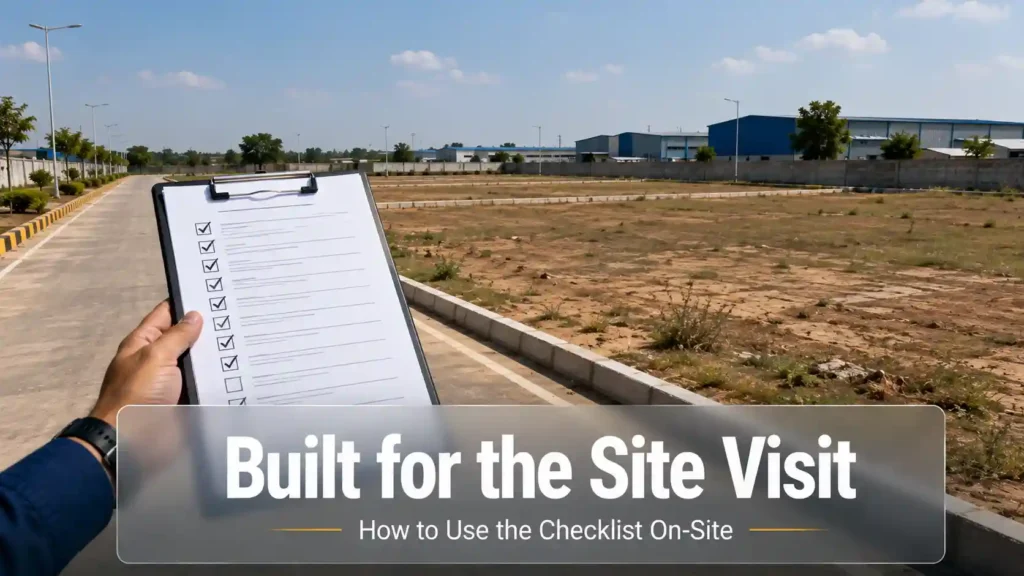
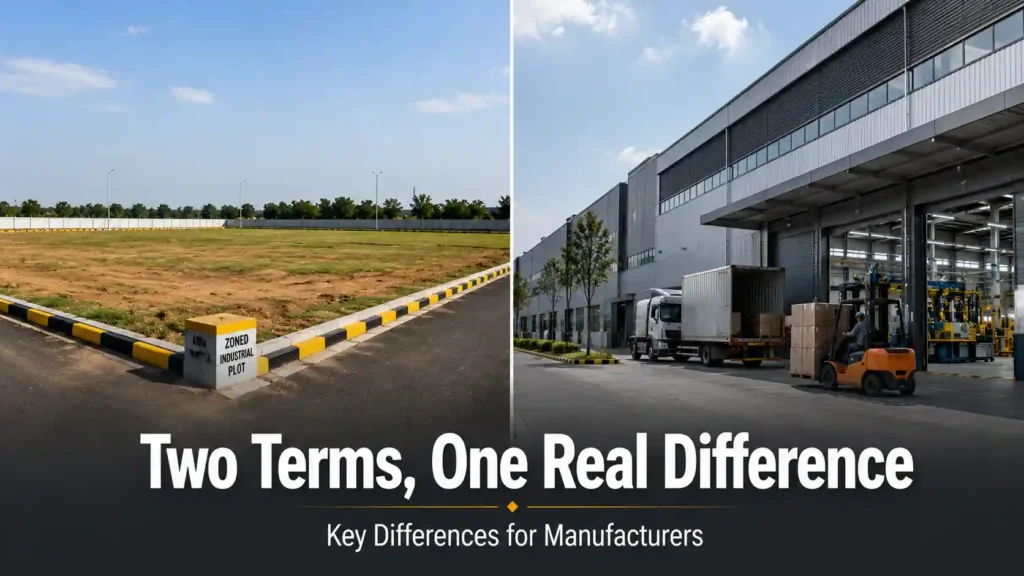
Factory Land vs Industrial Plot: Key Differences for Manufacturers “Industrial plot” and “factory land” get used almost interchangeably in real estate listings, which causes real confusion. Every factory needs to sit on an industrial plot, but not every industrial plot is actually set up to support a factory. This guide explains the real distinction, what it means practically for a manufacturer evaluating land, and closes with a checklist built specifically around manufacturing use, not generic industrial buying. Quick Answer: Factory Land vs Industrial Plot What’s the Actual Difference Between “Factory Land” and an “Industrial Plot”? An industrial plot is the formal, zoning-based category: land officially designated for industrial use within a planned estate or NOC zone. Factory land describes a functional use case within that category, specifically land intended to support manufacturing operations. This distinction matters because “industrial plot” covers a wide range of actual uses. The same broad zoning category can include warehousing, logistics, light assembly, and heavier manufacturing, each with meaningfully different infrastructure needs. So, when you’re evaluating land specifically to build and run a factory, “it’s zoned industrial” answers only part of the question. The more useful question is whether this specific plot is actually equipped for manufacturing, not just legally permitted to host it. What Does “Intended Use” Mean for a Manufacturer Specifically? Intended use, for a manufacturer, means confirming the plot’s permitted category actually covers your specific manufacturing process, not just “industrial” in general. Some industrial plots are designated more narrowly, for light assembly or low-pollution activity, while others accommodate heavier processing. A mismatch here can surface late and expensively. A plot that’s technically zoned industrial but not cleared for your specific process type can block environmental clearance well after you’ve already committed capital to the purchase. Confirming intended use, in practice, means checking the plot’s specific permitted activity list against your actual manufacturing process, not assuming general industrial zoning automatically covers it. What Infrastructure Should a Manufacturer Evaluate Beyond a Standard Listing? A manufacturer needs to evaluate infrastructure at a level of detail most standard plot listings don’t provide. Power load is the clearest example: a listing might advertise “power available” without specifying whether the actual sanctioned load meets your equipment’s real draw. Structural and loading considerations matter too, particularly for heavier machinery or multi-storey layouts, where ground conditions and floor loading capacity directly affect what you can actually install. Water supply and effluent handling also deserve specific attention if your process involves washing, cooling, or chemical use, since general estate-level infrastructure doesn’t guarantee your specific plot is connected to it. Road access matters differently for manufacturers than for other industrial users too, since raw-material inbound and finished-goods outbound movement both depend on genuine truck-capable access, not just proximity to a highway. What Approvals Does Factory Land Need That a Generic Industrial Plot Might Not? Manufacturing specifically triggers approval requirements that other industrial uses, like warehousing, often don’t. Pollution-category clearance is the clearest example: your specific process, whether it involves plating, painting, forging, or simple assembly, determines which environmental category applies, and that category needs to match what the plot is cleared for. A factory licence, issued by the relevant state authority, is generally required before commencing manufacturing operations, separate from the land purchase itself. Where the land was originally agricultural, Change of Land Use (CLU) approval also needs to be complete and on record before manufacturing use is legally sound. 📖 Read This Also: How to Verify Industrial Land Before Buying: Site & Document Due Diligence Guide This guide covers the full verification process behind confirming permitted use and approvals in detail, applicable to any industrial land purchase, including factory-specific evaluation. Looking for a plot that matches your factory’s specific requirements? Share your requirements and we’ll help you explore suitable options. What Site-Selection Factors Matter Most When Buying Land for a Factory? Site selection for a factory prioritises operational factors that matter less for other industrial uses. Proximity to your actual supply chain, whether that’s raw-material sources or, for auto-ancillary manufacturers, an anchor OEM plant, often outweighs generic “close to the highway” claims. Labour availability matters directly too, since manufacturing operations typically need a larger, more skilled on-site workforce than warehousing or logistics use. Flexible zoning, like an NOC zone permitting industry, warehousing, or service use on the same plot, can also matter if your operation is likely to expand into adjacent activities over time. A Manufacturer’s Land Requirement Checklist How to Confirm a Plot Actually Supports Factory Use Before Buying Confirm each checklist item directly, rather than relying on a listing’s general description. Request the plot’s specific permitted-use documentation, verify power load with the relevant utility provider directly, and, where possible, consult a structural professional before assuming a plot suits heavier machinery. Treat a favourable answer on zoning alone as a starting point, not a conclusion. A plot can be entirely legitimate as an “industrial plot” while still requiring real verification before it qualifies as suitable “factory land” for your specific operation. RS Group Realty’s Role for Manufacturers Evaluating Land RS Group Realty works with manufacturers evaluating land across two corridors: Sisana, near IMT Kharkhoda’s Maruti Suzuki-anchored ecosystem, suited to auto-ancillary and OEM-adjacent manufacturers, and Barhana, near Rohtak and Jhajjar, an NOC zone offering flexible use across manufacturing, warehousing, and service activity. For a manufacturer working through this checklist on a specific plot, RS Group Realty can walk through how a project like Sisana or Barhana holds up against each item directly, rather than leaving “industrial plot” and “factory land” as interchangeable terms. The gap between an industrial plot and genuine factory land is real, and it’s worth closing before you commit capital, not after. Working through terminology, intended use, infrastructure, approvals, and site-selection factors in that order gives you a much clearer answer than zoning status alone ever will. Planning a factory in Delhi NCR or Haryana? Tell us your location, plot size and manufacturing requirement. Frequently Asked Questions About Factory Land vs Industrial Plot Q1. Is factory land the