
Why Invest in Rai Industrial Area? Manufacturing, Logistics & Growth Potential
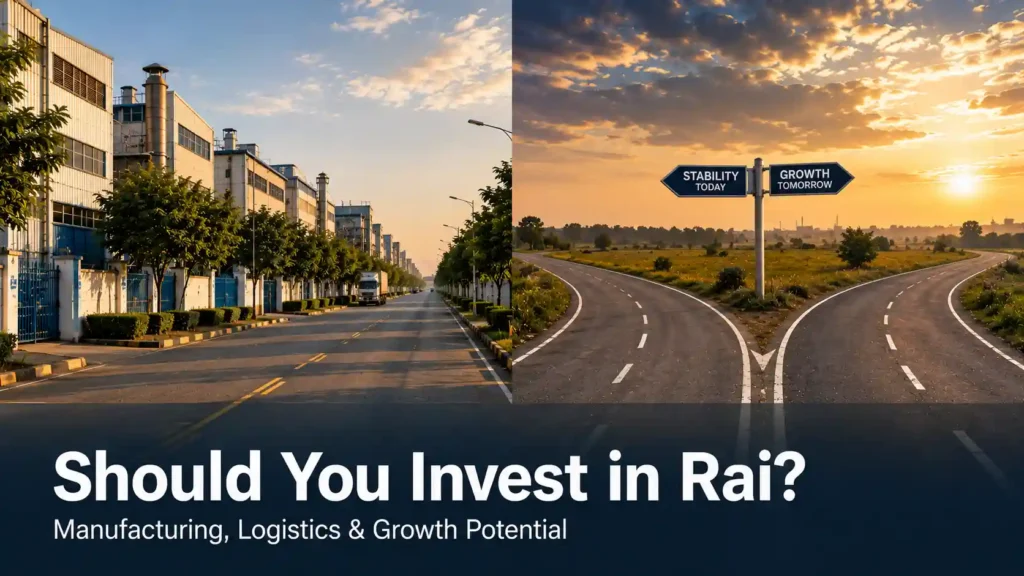
Rai Industrial Area comes up constantly in Sonipat industrial searches, but “should you actually invest here” is a different question from “what is it.” This guide answers that second question directly, weighing Rai against what different types of buyers actually need.
For the full location and background picture, start with RS Group Realty’s Rai Industrial Area overview. This guide goes further, analyzing Rai specifically as an investment and business-location decision, across manufacturing fit, logistics, infrastructure, and who it suits best.
Quick Answer: Is Rai Industrial Area Worth Investing In?
- Rai suits businesses that want immediate operational access to a mature ecosystem, not early-stage growth potential.
- Its logistics position is genuinely strong — near Sonipat’s own inland container depot, inside the Amritsar-Delhi-Kolkata Industrial Corridor’s influence zone, and close to the Eastern Dedicated Freight Corridor.
- Infrastructure is already built out: power, water, sewerage, and a Common Effluent Treatment Plant are in place, unlike a zone still under development.
- Food processing and agro-based businesses have a particularly strong case here, thanks to Rai’s dedicated Food Park.
- Investors chasing lower entry cost and early-mover price appreciation typically find a better fit in newer zones like Sisana, near IMT Kharkhoda.
Is Rai Industrial Area a Good Fit for Manufacturing Businesses?
Rai suits manufacturing businesses that value an established peer network and working infrastructure over ground-floor pricing. Close to 800 firms already operate here, spanning food processing, auto components, rubber goods, and metal fabrication.
That existing density means a new manufacturer isn’t operating in isolation. Suppliers, service providers, and a skilled local workforce are already present, built up over decades rather than promised for the future. For a manufacturer that needs to be operational quickly, this maturity has real value.
However, Rai’s manufacturing base is MSME-dense rather than anchored by one large plant. A business specifically chasing supply-chain proximity to a single big OEM, the way an auto-component supplier might near Maruti Suzuki’s Kharkhoda plant, won’t find that same anchor-driven demand here.
How Strong Is Rai’s Logistics Position?
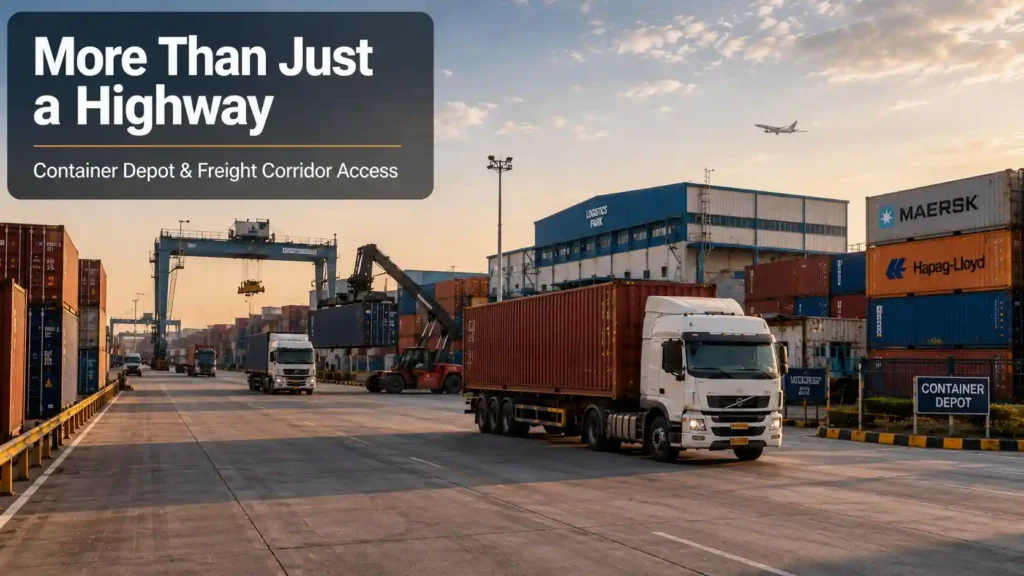
Rai’s logistics position is genuinely strong, anchored by more than just road access. Sonipat has its own inland container depot, giving businesses in the area a direct route into international container trade without relying solely on Delhi’s ports and airports.
Beyond that, Rai sits within the influence zone of the Amritsar-Delhi-Kolkata Industrial Corridor and close to the Eastern Dedicated Freight Corridor, a rail-based freight network built specifically to move containerised cargo faster and cheaper than road alone. The Haryana Orbital Rail Corridor, a large-scale rail investment connecting Palwal to Harsana Kalan, adds a further planned layer to this freight network.
Road access matters too, through NH-44 (GT Road), roughly 35 km from Delhi. That said, GT Road traffic can run heavy at peak hours, so a logistics plan built purely on map distance will underestimate real transit time. Businesses should factor in actual drive-time variability, not just the highway’s presence.
What Does Rai’s Location Actually Offer Investors?
Rai’s location offers proximity to an established urban base, not an isolated industrial pocket. It sits just 1 km from Sonipat city and close to Kundli, another established industrial area in the same corridor.
This urban adjacency matters practically. Workforce access, local services, and administrative proximity are all easier here than in a newer township still building out its surrounding infrastructure. For a business that values convenience over a lower price point, that’s a genuine advantage.
At the same time, this same maturity means Rai’s location doesn’t offer the kind of undeveloped-land upside a newer corridor does. The location’s value is largely already reflected in current pricing, not still unfolding.
Rai Industrial Area Investment Location Map
See how Rai Industrial Area connects with Sonipat, Delhi NCR, NH-44, Kundli, the Inland Container Depot (ICD), and nearby industrial corridors that influence manufacturing and logistics investments.
How Infrastructure-Ready Is Rai Compared to Newer Zones?
Rai is significantly more infrastructure-ready today than a still-developing industrial zone, because its systems were built out over decades rather than recently. Power distribution, water supply, sewerage, and a Common Effluent Treatment Plant are already operational across the estate.
This matters directly for time-to-operation. A business setting up in Rai generally isn’t waiting on basic utility connections the way it might in a zone still completing its infrastructure rollout. That reduces one entire category of project risk.
The trade-off is upgrade pace. Newer zones are actively expanding capacity and adding infrastructure as they grow, while Rai’s existing systems, though functional, aren’t being significantly rebuilt. What you get in Rai is proven reliability, not the newest available capacity.
📖 Read This Also: Sisana vs Rai Industrial Area: Complete Investment Comparison 2026 For a direct, side-by-side breakdown of how Rai and a newer zone like Sisana compare on pricing, connectivity, and growth trajectory, this comparison covers both in full.
What Business Types Suit Rai Best?
Food processing and agro-based businesses have the clearest, most specific case for Rai, thanks to its dedicated Food Park zone in Sector 38, Phase II. This isn’t a generic claim — verified companies already operate there, including a substantial, well-capitalized food manufacturer.
Beyond food processing, general manufacturers in auto components, rubber goods, and metal fabrication also fit Rai’s existing base well, particularly at MSME scale rather than large single-facility operations. Warehousing and light logistics businesses benefit from the estate’s urban proximity and established road network too.
Not sure whether your manufacturing or warehouse business is the right fit for Rai Industrial Area?
Who Should Consider Rai Industrial Area?
Rai suits investors and businesses that prioritise immediate operational readiness over early-stage growth potential. If your business needs to be running quickly, with existing infrastructure and a working peer network already in place, Rai’s maturity is a genuine asset rather than a limitation.
It’s also a strong fit for food-processing and agro-based businesses specifically, given the Food Park’s dedicated zoning and existing anchor tenants. Similarly, investors who want exposure to an established, historically stable industrial market, rather than a speculative early-growth story, may prefer Rai’s steadier profile.
Finally, buyers comfortable navigating a resale transaction, including full title verification across a chain of previous owners, are better positioned for Rai than those wanting a simple, fresh-title purchase.
Who May Prefer Another Location Instead?
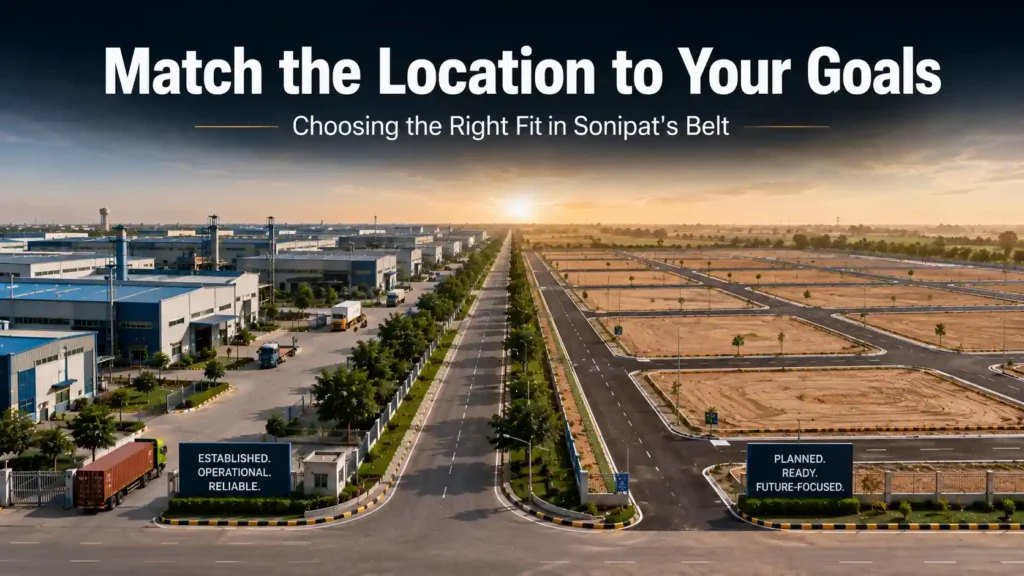
Investors chasing lower entry cost and long-term price appreciation typically find a better fit outside Rai, since most of its own appreciation from initial development has already happened. A zone still filling its plot inventory offers more room for that kind of growth.
Auto-component businesses specifically seeking proximity to a single large OEM’s supply chain, such as Maruti Suzuki’s Kharkhoda plant, will find a more directly relevant ecosystem in the Kharkhoda-Sisana belt than in Rai’s broader, MSME-dense base.
Buyers who strongly prefer a clean, fresh title with no resale chain to verify should also look elsewhere. Rai’s land market is overwhelmingly resale, so avoiding that verification burden entirely means choosing a zone with fresh government or developer allotment instead.
| Your Priority | Fits Rai Industrial Area | Consider Instead |
| Fast operational readiness | ✅ Strong fit | — |
| Lowest possible entry price | Less competitive | Sisana (₹14,000/sq yard, fresh title) |
| Food or agro processing | ✅ Strong fit — dedicated Food Park | — |
| Proximity to a single large OEM | Limited | Kharkhoda-Sisana belt |
| Clean title, no resale chain | Mostly resale here | Sisana (fresh allotment) |
| Established peer network | ✅ Strong fit | — |
| Large, contiguous single-facility plot | Limited — fragmented resale parcels | Newer HSIIDC zones |
| Logistics / freight-corridor access | ✅ Strong fit — ICD, DFC proximity | — |
How Rai Compares to Sisana for Different Investor Profiles
The right choice between Rai and a newer zone like Sisana depends on what you’re actually optimising for, not which one is objectively better. Rai trades a resale premium and verification burden for immediate infrastructure and an established peer network.
Sisana, by contrast, trades a less-proven ecosystem for a lower, fixed entry price and a clean title from day one. Neither profile suits every buyer; the decision comes down to whether your business values speed-to-operation or growth runway more.
Need help choosing between Rai Industrial Area and Sisana based on your business type and budget?
RS Group Realty’s Role for Investors Weighing Rai
RS Group Realty tracks the wider Sonipat industrial belt, including Rai’s established market and newer zones like Sisana near IMT Kharkhoda. The company’s own developed project is in Sisana, not inside Rai’s estate.
For investors weighing Rai specifically, RS Group Realty’s role is to give an honest, comparative read, including current plot pricing across the belt, so the decision reflects your actual priorities rather than a one-sided pitch. When Sisana’s industrial plots fit better, that’s the honest answer too.
Rai Industrial Area’s investment case is real, but specific. For businesses and investors who value immediate operational access, an established peer network, and genuine logistics infrastructure, Rai is a legitimate, well-supported choice. For those chasing early-stage growth or a lower entry point, the wider belt offers better-suited alternatives.
Frequently Asked Questions About Investing in Rai Industrial Area
Q1. Is Rai Industrial Area a good investment in 2026? It depends on your goals. Rai suits investors who want immediate operational access to an established ecosystem rather than early-stage growth potential, which is better found in newer zones nearby.
Q2. What makes Rai’s logistics position strong? Rai benefits from Sonipat’s own inland container depot, proximity to the Amritsar-Delhi-Kolkata Industrial Corridor and the Eastern Dedicated Freight Corridor, and NH-44 road access, though GT Road traffic can affect real travel time at peak hours.
Q3. Which businesses fit Rai Industrial Area best? Food-processing and agro-based businesses have the clearest fit, given Rai’s dedicated Food Park, alongside general MSME-scale manufacturers in auto components, rubber goods, and metal fabrication.
Q4. Is Rai’s infrastructure ready for immediate business setup? Yes. Power distribution, water supply, sewerage, and a Common Effluent Treatment Plant are already operational across the estate, reducing the setup delays a newer zone might involve.
Q5. Who should consider investing in Rai Industrial Area? Businesses wanting fast operational readiness, food-processing companies, and investors seeking stable, established-market exposure rather than speculative early growth.
Rai vs. Alternatives — Making the Right Call
Q6. Who might prefer a different location instead of Rai? Buyers chasing lower entry cost and long-term appreciation, auto-component businesses wanting proximity to a single large OEM, and anyone who wants a fresh title without a resale chain to verify.
Q7. How does Rai compare to Sisana for investment purposes? Rai offers immediate infrastructure and an established peer network at a resale premium; Sisana offers a lower, fixed entry price and clean title but a less-proven ecosystem.
Q8. Does Rai have strong logistics compared to newer industrial zones? Yes, arguably stronger in some respects, since Rai benefits from an existing inland container depot and established freight corridor proximity that newer zones are still building toward.
Q9. Is Rai Industrial Area suitable for large-scale manufacturing plants? It can be, but Rai’s land market is mostly smaller, resale parcels rather than large contiguous plots, so businesses needing a single big facility may find newer zones better suited.
Q10. Does RS Group Realty recommend Rai or Sisana for investment? Neither by default. RS Group Realty’s own project is in Sisana, but this guide evaluates Rai honestly on its own merits so investors can match the location to their actual priorities.
