
Best Industrial Plots in Kharkhoda for Manufacturers, Warehouses & Logistics Businesses
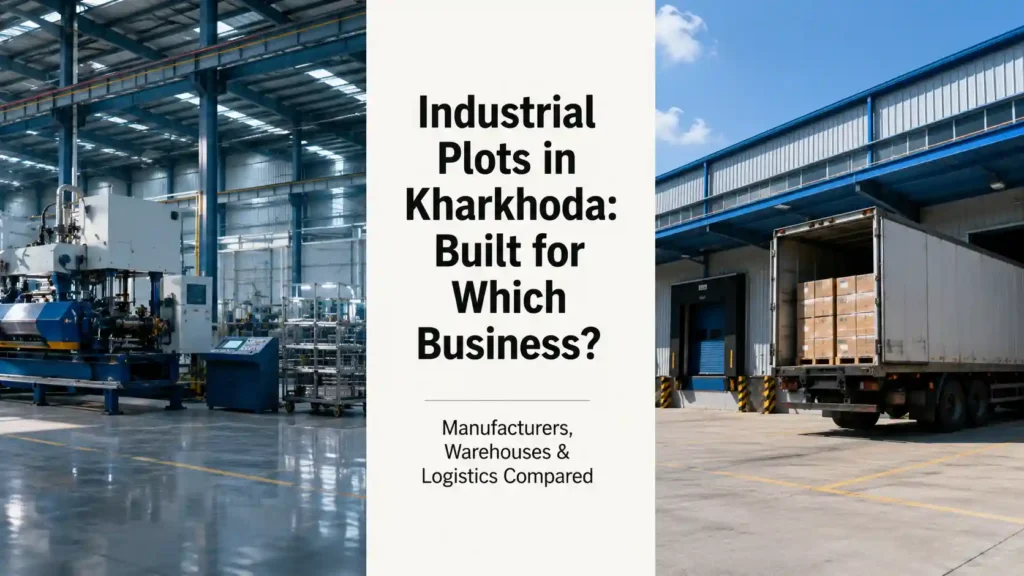
“Industrial plots in Kharkhoda” means something different depending on who’s searching. A factory owner needs something a warehouse operator doesn’t. An investor needs something neither of them needs.
This guide covers all three. We’ll look at why Kharkhoda, Haryana works for manufacturers and logistics businesses specifically, what kind of plot each one actually needs, and how an investment buyer’s priorities differ from an operational buyer’s priorities.
Why Kharkhoda Works for Industrial Businesses, Not Just Investors
Most content about Kharkhoda focuses on land appreciation. That’s fair, but it skips a more practical question: does this place actually work for running a business?
Kharkhoda is home to IMT Kharkhoda, a government-developed industrial township built by HSIIDC. Inside it, Maruti Suzuki’s plant has been in commercial production since February 2025. Therefore, an industrial workforce is already forming locally, not something a new business has to build from zero.
Also, the KMP Expressway runs directly past the area, connecting Kharkhoda to Delhi, Bahadurgarh, and Manesar without entering central Delhi traffic. So, for a business that actually needs to move goods or people daily, this connectivity matters far more than any appreciation chart.
Why Manufacturers Should Consider Kharkhoda
Manufacturers care about different things than investors. Power reliability, workforce access, and supply chain proximity usually top the list.
Kharkhoda’s anchor industry, Maruti Suzuki, creates direct demand for auto-component manufacturers, packaging firms, and ancillary suppliers. Auto-parts major Minda has already set up units inside the estate. Therefore, a manufacturer feeding this supply chain gains a genuine, nearby customer, not a hypothetical one.
HSIIDC’s original project plan permits a wide range of industries here, including food and beverage, metal products, textiles, chemicals, and machinery. However, every individual unit still needs its own environmental clearance, so manufacturers should confirm their specific process fits the plot’s permitted category before committing.
Also, 24-hour power supply is already established in developed pockets of the belt, which matters enormously for any production line that can’t tolerate outages.
Why Warehouse and Logistics Businesses Find Kharkhoda Useful
Warehouses and logistics operators evaluate land differently than manufacturers. Road access usually matters more than zoning category, and flat, regular plot shapes matter more than power load.
Kharkhoda’s position on the KMP Expressway means one facility here can realistically serve Delhi, Haryana, Punjab, and Rajasthan. Also, the Delhi-Amritsar-Katra Expressway and NH-44 add further reach, which is exactly what a regional distribution hub needs.
Internal roads in developed pockets of the belt run up to 44 feet wide, wide enough for container trucks to manoeuvre without congestion. As a result, loading docks and yard operations work smoothly from day one, rather than requiring costly road upgrades first.
Furthermore, warehousing generally carries a lighter compliance burden than manufacturing, since most storage operations don’t trigger the same pollution-category scrutiny that a production unit would.
What Kind of Plot or Zone Does Your Business Actually Need?
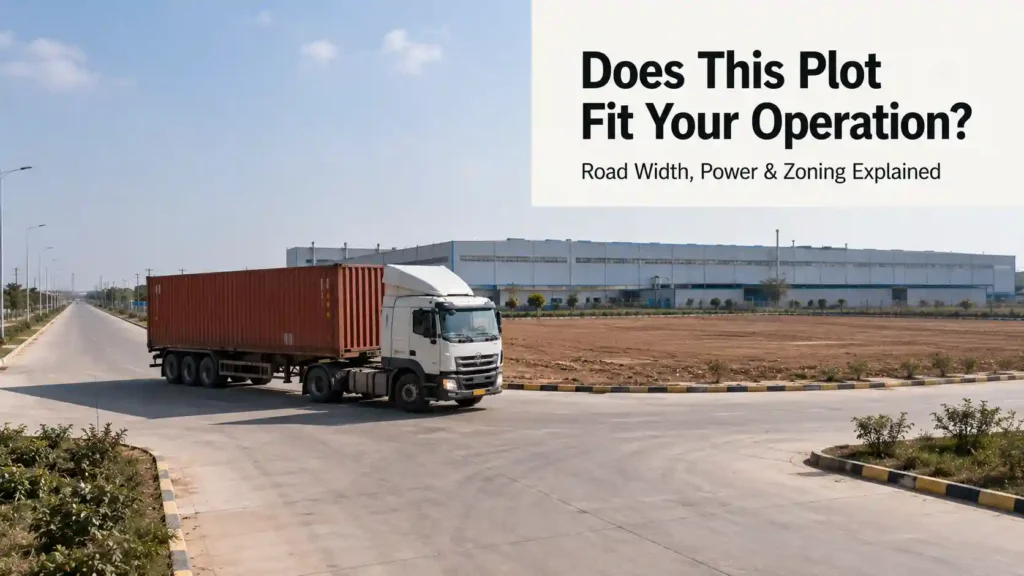
A good-looking plot on paper isn’t automatically the right plot for your business. So, match the land to your actual operation, not just the price per square yard.
Manufacturers need confirmed power load capacity, often three-phase connections, along with a pollution-category fit for their specific process. Also, road access matters for raw-material delivery, and setback space may be needed for effluent treatment or storage, depending on the activity.
Warehouse and logistics operators need large, regular-shaped plots that allow efficient racking layouts, plus wide road frontage that supports container-truck turning radii. Height clearance also matters here in a way it rarely does for a standard factory shed.
Auto-ancillary suppliers often do well with smaller-to-medium plots, since proximity to the anchor plant for just-in-time delivery matters more than raw plot size.
Investment Buyer vs Operational Buyer: A Different Set of Priorities
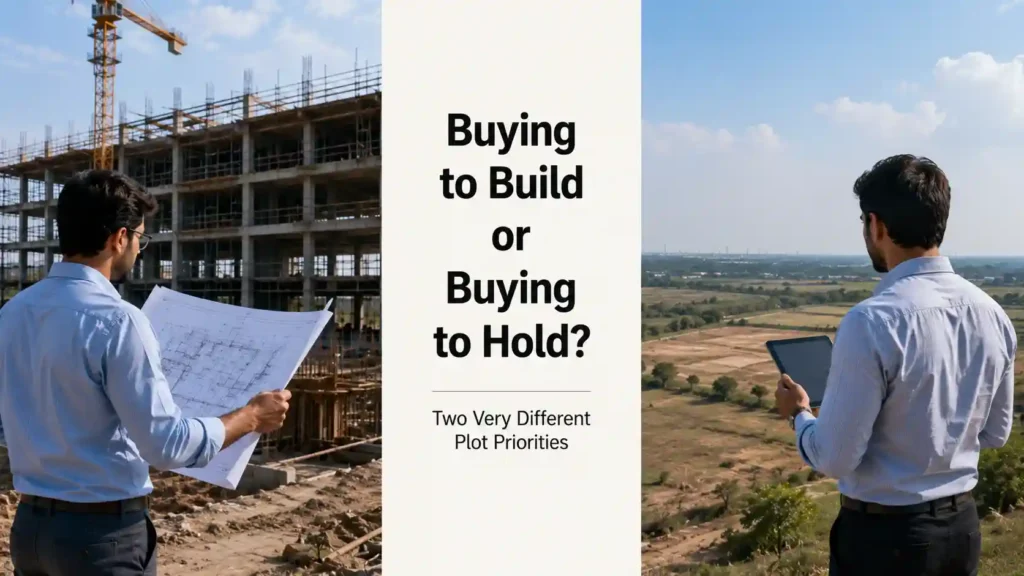
This is where many buyers get confused. An investment buyer and an operational buyer can look at the exact same plot and want completely different things from it.
Operational buyers need infrastructure ready now, not eventually. They need the zoning to exactly match their activity, since a mismatch can block their environmental clearance entirely. Also, possession timeline matters enormously, since a delayed handover directly delays revenue.
Investment buyers, by contrast, prioritize entry price and growth trajectory over immediate readiness. They’re not building tomorrow, so today’s infrastructure gaps matter less than the broader demand thesis behind the belt. However, title clarity and future liquidity matter more to them than to someone planning to operate the land themselves.
Many real buyers sit somewhere between these two, planning to operate eventually while also benefiting from appreciation. Therefore, the honest move is figuring out which priority actually dominates your decision, then choosing a plot that serves that priority first.
How to Choose the Right Plot for Your Business Type
Questions Manufacturers Should Ask Before Buying
Does this plot’s permitted category match my specific manufacturing process? Is the available power load actually sufficient for my equipment? What is the realistic possession timeline, and does it match my production launch goals? Is the access road wide enough for my raw-material and outbound delivery trucks?
Questions Warehouse and Logistics Buyers Should Ask Before Buying
Is the plot flat and regular enough for an efficient racking and dock layout? Can container trucks actually turn and manoeuvre on the access road, not just drive past it? How close is the nearest expressway entry point, in real driving terms? Is this plot inside an already-developed pocket, or one still waiting on basic infrastructure?
How RS Group Realty Helps You Find the Right Fit
RS Group Realty treats “industrial plots in Kharkhoda” as several different questions, not one generic pitch.
Therefore, before recommending any plot, the team asks what you actually plan to do with it: manufacture, store and distribute, or hold for appreciation. That answer changes which plot, which zone, and which timeline genuinely fits your situation.
If you’d like to explore current options matched to your specific business type, our IMT Kharkhoda industrial plots page and the Sisana location page are good starting points, both with a quick way to tell us what you’re looking for.
IMT Kharkhoda Location Map
The map below highlights IMT Kharkhoda’s strategic position near the KMP Expressway, NH-44, Delhi NCR, and major industrial corridors, making it an attractive destination for manufacturing and logistics investments.
Frequently Asked Questions About Industrial Plots in Kharkhoda
Q1. What kind of industrial plots are available in Kharkhoda? Kharkhoda offers a mix of government-allotted plots inside the official IMT Kharkhoda estate and private freehold plots in surrounding villages like Sisana, suited to manufacturing, warehousing, and logistics use cases.
Q2. Is Kharkhoda good for manufacturing units? Yes, particularly for businesses connected to the auto sector, given Maruti Suzuki’s operating plant and the supplier ecosystem already forming around it, though every unit must confirm its own pollution-category fit first.
Q3. Is Kharkhoda suitable for warehouse and logistics businesses? Yes. Its position on the KMP Expressway, combined with reach to NH-44 and the Delhi-Amritsar-Katra Expressway, makes it a practical base for distribution across Delhi, Haryana, Punjab, and Rajasthan.
Q4. What plot size do I need for a factory in Kharkhoda? This depends on your process and equipment, but manufacturers typically need confirmed power load and pollution-category fit more than sheer plot size, since requirements vary significantly by industry type.
Q5. What plot size do I need for a warehouse in Kharkhoda? Warehouse operators generally benefit from larger, regular-shaped plots that support efficient racking and dock layouts, along with road frontage wide enough for container-truck access.
More FAQs on Best Industrial Plots in Kharkhoda
Q6. What is the difference between buying as an investor versus an operational buyer? Operational buyers need infrastructure ready now and zoning that exactly matches their activity, while investment buyers prioritize entry price, growth trajectory, and title clarity over immediate build-readiness.
Q7. What infrastructure does an industrial plot in Kharkhoda need to have? Reliable power supply, adequately wide internal and access roads, and a zoning or pollution-category classification that matches your intended use are the core requirements to verify before buying.
Q8. Can auto-ancillary businesses set up near IMT Kharkhoda? Yes. Auto-component suppliers already operate inside the estate, and proximity to Maruti Suzuki’s plant makes this a practical location for just-in-time delivery to that supply chain.
Q9. What should I check before buying an industrial plot in Kharkhoda? Confirm the plot’s title and zoning, verify power and road infrastructure match your business type, and check the realistic possession timeline against your own operational or investment goals.
Q10. Where can I find ready industrial plots in Kharkhoda? Established micro-locations like Sisana, inside the broader Kharkhoda belt, offer fixed-rate, fresh-title plots already available, without the longer government allotment process.
