
Documents Required to Buy Industrial Land in Haryana: Complete Buyer Guide
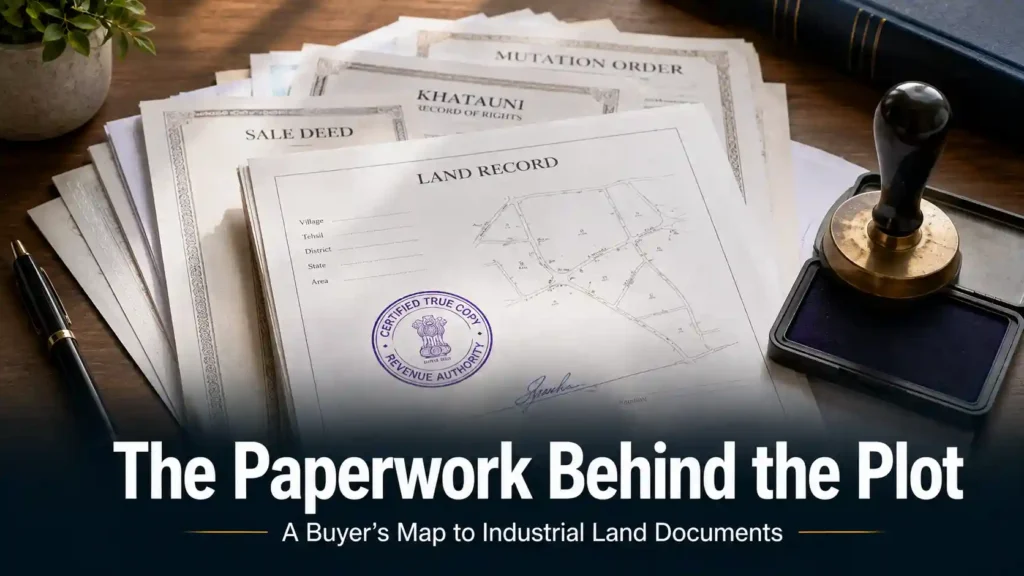
Ask five people what documents you need to buy industrial land in Haryana, and you’ll likely get five different answers. That’s not because anyone’s wrong. It’s because the real answer depends entirely on what kind of land you’re buying.
Government-allotted HSIIDC plots, resale HSIIDC plots, and private freehold industrial land each involve a genuinely different documentation path. This guide walks through the common categories buyers typically review across all three, using Haryana’s actual terminology, not generic checklist language borrowed from another state.
One thing this guide will not do is promise you a complete, one-size-fits-all list. Exact requirements vary by transaction, and a qualified property lawyer should verify your specific purchase before you commit funds. Treat what follows as the map, not the final word.
Quick Answer: Documents Commonly Involved in Buying Industrial Land in Haryana
- Core title documents apply to almost every purchase: Jamabandi (or its extract, Fard), mutation records, and the chain of registered sale deeds behind the current owner.
- HSIIDC-allotted or resale plots add their own layer: the original Letter of Allotment, HSIIDC’s no-dues confirmation, and prior written transfer permission from HSIIDC itself.
- Private freehold industrial land typically requires a Change of Land Use (CLU) certificate from Haryana’s Town & Country Planning department, alongside the standard title documents.
- Mutation, called Intkal in Haryana, is a separate step from sale deed registration. An unmutated purchase, where the seller is registered but the revenue record still shows the old owner, is one of the most common red flags buyers encounter.
- This is educational information, not legal advice. Exact requirements vary by transaction, and independent professional verification is genuinely necessary before you commit funds.
Why “Documents Required” Depends on the Transaction Type
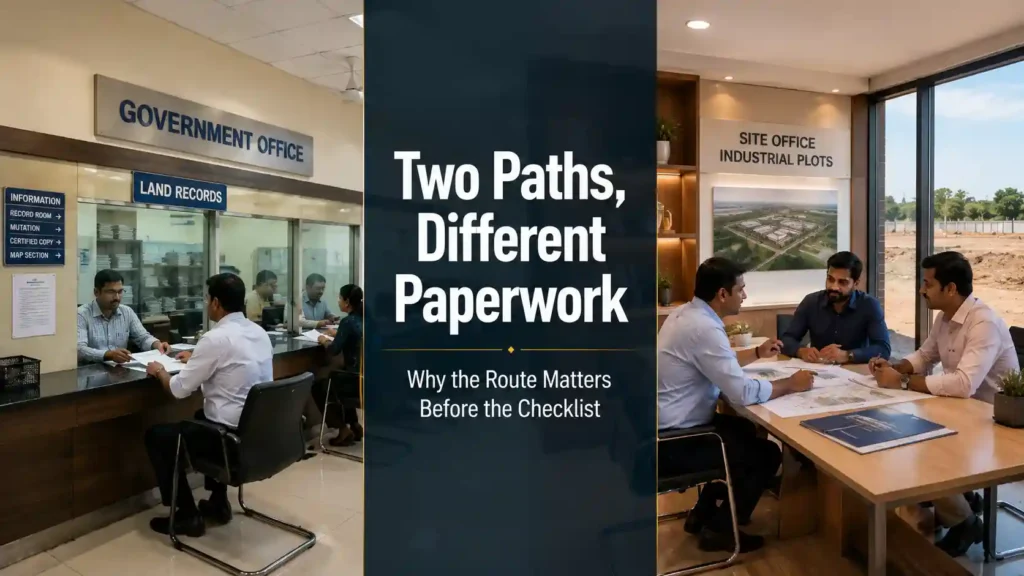
The single biggest documentation mistake buyers make is applying one checklist to every purchase. Haryana’s industrial land market runs on at least two genuinely different systems.
Government-allotted land, administered directly by HSIIDC, follows its own allotment and transfer rules under the Corporation’s own Estate Management Procedure. Private freehold land follows standard property law plus Haryana’s Change of Land Use process through the Town & Country Planning department. A plot’s documentation path depends entirely on which category it falls into, not on where it happens to sit on a map.
| Category | Governing System | Core Additional Document |
| HSIIDC-allotted (new or resale) | HSIIDC’s own Estate Management Procedure | Letter of Allotment + HSIIDC transfer permission |
| Private freehold (converted land) | DTCP’s Change of Land Use process | CLU certificate |
| Both categories | Haryana Revenue Department | Jamabandi/Fard + current mutation |
Checking an Industrial Plot in Haryana? Verify the Documents First.
Have a specific plot in mind? Share the basic details and our team can help you understand which documents and verification points you should check before proceeding.
Before reviewing any specific document, confirm which category your target plot actually belongs to. That single fact determines almost everything else on this list.
Core Title and Ownership Documents to Review
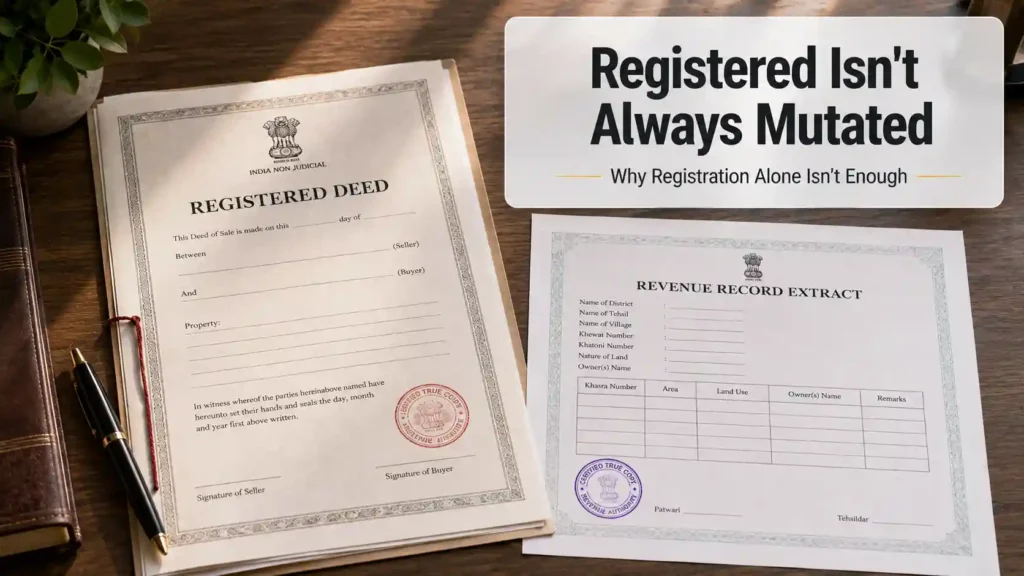
Regardless of which route you’re buying through, a few documents sit underneath almost every Haryana land transaction, since they come from the state’s revenue records rather than any single authority.
The Jamabandi is Haryana’s core record of ownership and cultivation rights, updated roughly every five years and accessible through the state’s official land records portal. A Fard is simply a certified extract of that same record for a specific parcel. Together, they show who officially holds the land today, not just who the seller claims to be.
Mutation, called Intkal in Haryana, is the process that updates the Jamabandi after a sale, inheritance, or transfer. Crucially, registering a sale deed does not automatically update the Jamabandi. If a previous sale was registered but never mutated, the revenue record can still show an earlier owner, which is exactly the kind of gap a buyer needs resolved before paying anything.
Additional Documents for HSIIDC-Allotted or Resale Industrial Plots
If your target plot was originally allotted by HSIIDC, whether you’re buying directly or through resale, a separate layer of documentation applies on top of the core title records.
The original Letter of Allotment, sometimes issued as a Regular Letter of Allotment, is the foundational document confirming the plot’s size, zoning, and allotted rate. For any resale or transfer, HSIIDC’s own published requirements call for the original letter of allotment, an agreement to sell, a statement of the buyer’s means of financing, and a project report if the intended use is changing. Prior written permission from HSIIDC is required before any transfer proceeds, regardless of how long the current allottee has held the plot.
A no-dues position matters just as much as the paperwork itself. HSIIDC’s own transfer rules require confirmation that no outstanding dues remain, covering categories like enhanced land cost, maintenance charges, water and sewer charges, and external development charges. Separately, it’s worth checking whether the current allottee has met their production or construction timeline, since missed schedules can trigger a show-cause notice and, in some cases, resumption of the plot by HSIIDC itself.
Additional Documents for Private Freehold Industrial Land
Private freehold industrial land follows a different path, built around Haryana’s Change of Land Use process rather than HSIIDC’s allotment system.
A CLU certificate, issued by the Directorate of Town & Country Planning after review against the state’s Master Plan, confirms that agricultural land has been legally converted for industrial or commercial use. Applications for it typically draw on the same core records already mentioned, Jamabandi, mutation documentation, and a dimensioned site plan, alongside a registered sale deed establishing the seller’s title.
Private freehold status doesn’t remove the need for the core title checks either. A CLU certificate confirms permitted land use; it doesn’t, on its own, confirm the seller’s title is clean or that mutation is current. Both checks still matter, independently.
📖 Read This Also: Sisana Industrial Area See how one CLU-approved private industrial zone near IMT Kharkhoda presents its own documentation and title position.
Documents Related to Using the Land for Industrial Purposes
A few documents matter less for confirming ownership and more for confirming you can actually operate on the land once you own it.
Building plan approval from the relevant local authority, environmental clearance or a pollution-control no-objection certificate depending on your industry category, and fire safety clearance are common requirements before a factory can legally begin operations. Requirements here vary significantly by industry type and plot size, which is exactly the kind of detail a professional consultant familiar with your specific sector should confirm.
Your Own Documents as a Buyer
Beyond the seller’s paperwork, you’ll typically need your own PAN card, identity and address proof, and, if you’re purchasing through a company, LLP, or trust rather than as an individual, the entity’s registration and authorization documents naming who can sign on its behalf.
A Practical Verification Checklist
Before paying any token amount, confirm the plot’s category, HSIIDC-allotted or private freehold. Request the Jamabandi or Fard directly rather than relying on the seller’s copy. Check whether mutation is current or still pending. Ask specifically whether any dues, show-cause notices, or resumption proceedings are outstanding if the plot was HSIIDC-allotted. For a complete step-by-step verification process, follow this industrial plot buying checklist before purchase
Why Professional Verification Still Matters
Everything above describes common categories, not a guarantee. Real transactions surface details a general guide simply can’t anticipate.
What a Property Lawyer Typically Checks That a Buyer Might Miss
A property lawyer or qualified consultant can trace the full chain of title across previous transfers, confirm there’s no pending litigation attached to the plot, verify HSIIDC or DTCP records directly rather than relying on the seller’s copies, and check specific conditions in the original allotment or CLU approval that a standard document review might not surface on its own.
Where This Leaves Buyers
Treat this guide as a starting map for the conversation you need to have with your own lawyer, not a replacement for it. Exact requirements shift by transaction, by category, and sometimes by which specific HSIIDC estate or DTCP jurisdiction your plot falls under.
If you’re evaluating a specific plot, our current IMT Kharkhoda industrial plots page can walk you through that project’s own documentation position directly, alongside your own independent legal review.
Have a Specific Industrial Plot in Mind?
Share the plot or location you’re evaluating and get a practical starting point for the documents and checks to review before paying a token amount.
Frequently Asked Questions About Industrial Land Documents in Haryana
Q1. What documents are required to buy industrial land in Haryana? It depends on whether the land is HSIIDC-allotted or private freehold. Core documents across both include Jamabandi or Fard, mutation records, and the sale deed chain; HSIIDC plots add a Letter of Allotment and transfer permission, while private land adds a CLU certificate.
Q2. What is the difference between Jamabandi and Fard? They’re essentially the same underlying record. Jamabandi is the full revenue ownership record; a Fard is a certified extract of that record for one specific parcel.
Q3. What does mutation, or Intkal, actually confirm? It confirms the Jamabandi has been updated to reflect a change in ownership after a sale, inheritance, or transfer. Registering a sale deed alone does not update the Jamabandi automatically.
Q4. Is a CLU certificate required for all industrial land in Haryana? It’s generally required for private land being converted from agricultural to industrial or commercial use. HSIIDC-allotted land follows a different process, since it’s already designated for industrial use by the Corporation.
Q5. What documents does HSIIDC require to transfer a plot? HSIIDC’s own published requirements call for the original letter of allotment, an agreement to sell, a statement of the buyer’s financing means, and a project report if the project is changing, alongside prior written permission from the Corporation.
More Questions on Industrial Land Documentation in Haryana
Q6. What’s an “unmutated” plot, and why does it matter? It’s a plot where a sale was registered but the Jamabandi still shows the previous owner. It’s a common red flag, since it means ownership hasn’t formally transferred in the revenue record yet.
Q7. Do I need to check for outstanding dues before buying an HSIIDC plot? Yes. HSIIDC’s transfer process requires confirmation that no dues remain, covering categories like enhanced cost, maintenance charges, water and sewer charges, and development charges.
Q8. Can an HSIIDC plot be at risk even if the paperwork looks complete? Yes, if the allottee missed production or construction timelines. That can trigger a show-cause notice and, in some cases, resumption of the plot, which is worth checking independently of the standard documents.
Q9. What documents do I need as the buyer, not the seller? Typically your PAN card, identity and address proof, and, if buying through a company or other entity, its registration and signing-authority documents.
Q10. Should I rely on a checklist like this instead of hiring a lawyer? No. This kind of guide is educational, not a substitute for legal review. A property lawyer can verify records directly and catch transaction-specific issues a general checklist can’t anticipate.
